


Potatoes are native to the Americas where they were an important food in ancient times. In the area once ruled by the Inca civilization hundreds of varieties of the common potato, Solanum tuberosum, were developed before colonization in the 1500s. A limited number of varieties of potato arrived in Europe soon after.
The first illustration above is from Gerard’s The Herball of 1596 and depicts a plant and tuber of the sweet potato, Ipomoea batatus. He mentions that the plants he grew originated from stock collected in Peru. His plants did not flower and died when frosts killed them, causing the tubers to rot. As sweet potatoes are a tropical plant they rarely flower in cool, northern gardens and have to be harvested before hard frosts. Gerard also mentions the use of sweet potatoes as food: it is interesting that so long ago people boiled them with prunes, or roasted them with hot coals.
The second illustration is also from Gerard’s Herball and shows the common, starchy potato. He obtained the plants from Virginia. He mentions boiling the potatoes and serving them with vinegar and oil, and discusses roasting them. The general cultivation of potatoes in Europe was delayed through the sixteenth and seventeenth centuries, because the plants closely resemble poisonous nightshade. (Tomatoes, potatoes, eggplant and nightshade are all members of the Solanaceae family of plants). The Royal Society of London experimented with growing and eating potatoes in the seventeenth century; they realized potatoes would be an excellent, productive food for the poor. Something was needed at the time to supplement periodic losses of grain crops.
Potatoes arrived in Ireland early, possibly introduced by Sir Walter Raleigh. Because of their productivity, nutrition and adaptation to the cool climate, potatoes soon became popular in Ireland. This situation continued for generations as potatoes became the food staple in Ireland; often poor people had only potatoes to eat. A problem arose in the 1840s with diseases increasing, affecting almost all of the potatoes grown there. Grain was commonly exported from Ireland at that time, so there was little to eat. Starvation became widespread and more than one million people died.
One reason for the extent of the blight is that only three clones of potato were grown in Ireland at that time. This situation highlights an important factor in food production: a need for diversity in cropping. This is one vital reason to save open-pollinated heirloom vegetables and antique fruit and flower varieties for future generations.
As a result of the Great Potato Famine, new disease resistant varieties were sought. A reward of $10,000.00 was offered by the Commonwealth of Massachusetts to anyone who discovered a potato resistant to diseases. The third picture above is of ‘Garnet Chili’ potato from 1853, produced by Reverend Chauncy Goodrich of New York. He crossed several locally grown potatoes with a variety brought to the U.S. from Chile to create the truly blight-resistant ‘Garnet Chili’. It is still available today from specialist growers. I plan to grow ‘Garnet Chili’ in 2016, along with ‘Green Mountain’, dating to 1885, and ‘Irish Cobbler’, from 1876. All of these varieties keep well, are productive, nutritious and disease resistant.
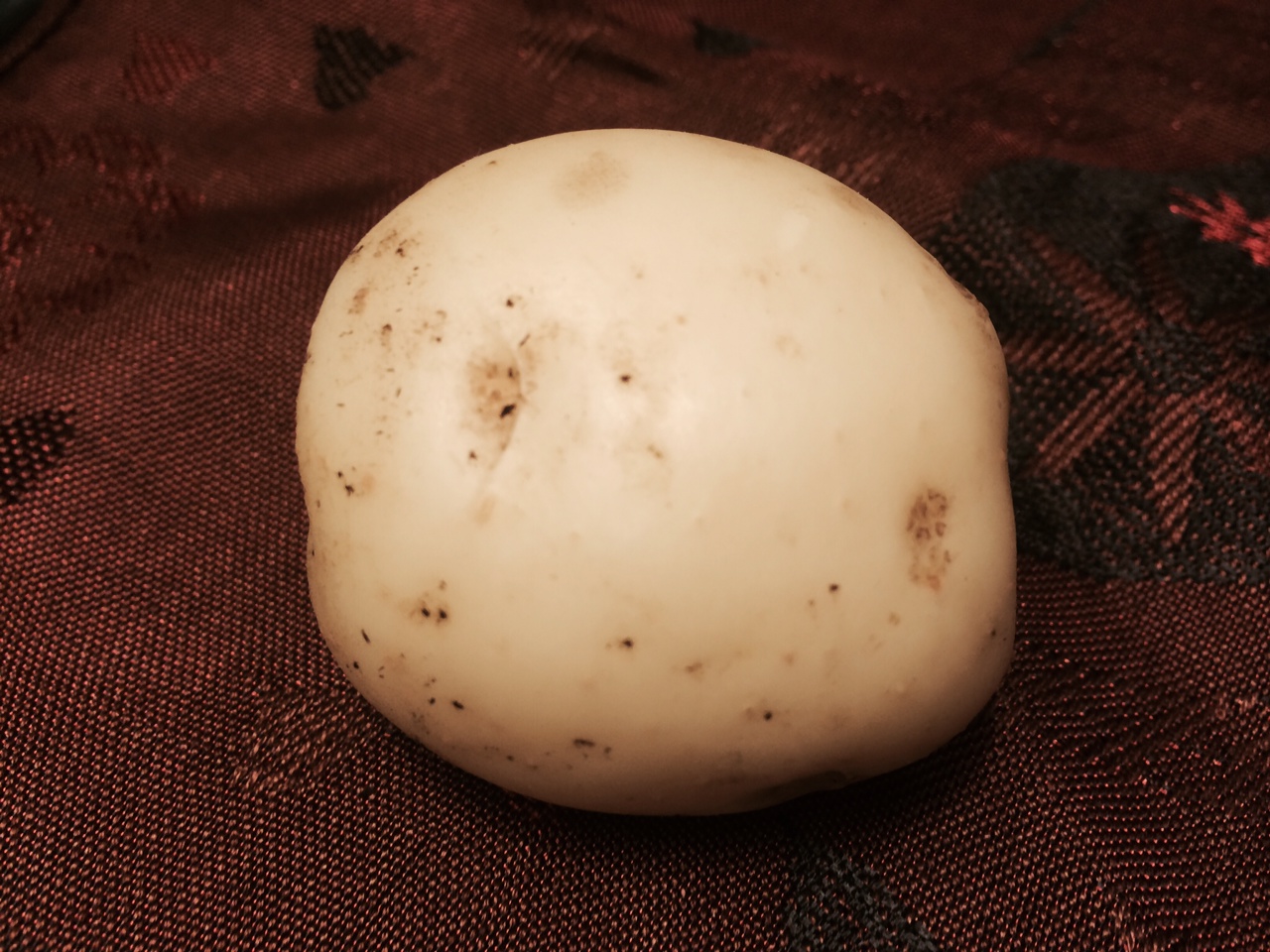
The last picture above (in color) is of ‘Irish Cobbler’ from my garden. The plants produced well this summer, though the tops died early, perhaps because of our unusually hot summer this year. ‘Irish Cobbler’ makes excellent boiled, roasted and mashed potatoes. As a baked potato the texture seemed a bit too mealy; another variety might be superior for baking. I recommend trying and preserving these antique potatoes. To keep them from year to year, plant them in a different location each year, with at least a four year rotation. Destroy any diseased plants right away and replant the best tubers typical of the kind you are saving. Store them unwashed in a dark place at 40 to 50 degrees with about 90% humidity. Good air circulation is important, so put them in boxes or sacks. They should keep for five to six months, but check for rot every so often.


 heirloomgardenerdotnet