Heirloom Plant Societies and Organizations

Standard

photo (68)photo (69)photo (70)

Today I will list a few interesting societies/groups focusing on preserving and propagating rare, endangered heirloom plants.

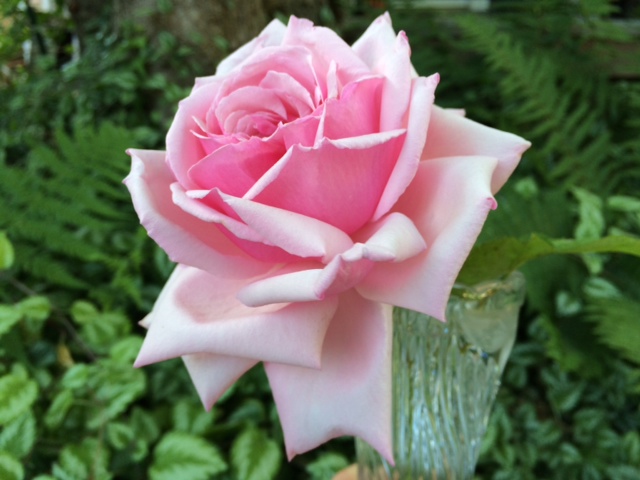
The top picture above shows ‘La France’ of 1867; considered the first hybrid tea.  Most of the old roses are exquisitely beautiful and quite worth collecting.  Newcomers are amazed at the diversity of species and cultivars of roses.  My collection centers on roses from the era of the Oregon Trail, 1830-1869.  Here are two excellent antique rose societies:

The Heritage Rose Foundation, P.O. Box 1719, Gonzales, LA 70707.  This is a non-profit organization, as are all listed here.  Individual yearly membership is $35.00; there are other membership rates available as well.  Their well illustrated and scholarly journal, Rosa Mundi, published twice a year, is included with your membership.  Their website is: www.heritagerosefoundation.org

The Heritage Roses Group, 22 Gypsy Lane, Camarillo, CA 93010.  Membership is $10.00 for digital format and $16.00 for the printed format.  Their journal is called The Rose Letter, published four times a year.  Their website: www.theheritagerosesgroup.org

Another wonderful organization is: The American Primrose Society, Jon Kawaguchi, Treasurer, 3524 Bowman Ct. Alameda, CA 95402.  Individual membership is $25.00 a year. The journal of APS, Primroses, is published four times a year.  Often included are articles about Primula species as well as rare, antique primroses and auriculas.  Auriculas were once one of the most popular flowers of all, especially in the first half of the 19th century.  Their website: www.americanprimrosesociety.org

The second photo above is of the bearded Iris violacea grandiflora from 1856.  I collect as many antique iris as I can; they are truly beautiful and easy to grow in most areas of the U.S.  An excellent, well-organized society concerning old iris is the Historic Iris Preservation Society (H.I.P.S).  Annual membership is $13.00 for individuals; there are other membership categories available as well.  I am a lifetime member.  Their address: H.I.P.S, Judy Eckhoff, 7911 S. Yoder Rd., Haven, KS 67543.  The well illustrated, scholarly journal of H.I.P.S. is published two times a year.  An email contact is: judy67543@gmail.com

The third picture above is of Broccoli ‘Calabrese’ an antique vegetable from before 1880.  It originated in Italy and is productive, having many side shoots that add to the harvest.  I am listing two societies concerned with preserving heirloom vegetables.

Native Seed/SEARCH is a terrific seed exchange organization.  They have concentrated on saving many older, even ancient vegetables grown by Native Americans, especially those grown, or once grown, in the Southwest.  Some crops lost to certain native groups have been propagated and returned to their source by this organization.  Annual membership is $35.00.  Their newsletter, The Seedhead News is sent three times a year.  Their address: Native Seeds/SEARCH, 3061 N. Campbell Ave., Tucson, AZ 85719.  Their website: www.nativeseeds.org

The Seed Savers Exchange is another well organized society concerned with the preservation of heirloom vegetables and fruits.  Members often exchange seeds.  This society holds one of the largest collections of heritage apples in the U.S.  Yearly membership is 25.00.  They publish The Heritage Farm Companion magazine.  Their address: Seed Savers Exchange, 3094 N. Winn Rd., Decorah, IA 52101.  Their website: www.exchange@seedsavers.org


Two Heirloom Summer Squashes

Standard

photo (60) photo (59) photo (61)

Among squashes there are four species commonly grown as vegetables, Cucurbita maxima, C. mixta, C. moschata and C. pepo.  The top photo above shows an English heirloom summer squash, ‘Vegetable Marrow’.  This variety is classified as a member of species C. pepo, the same species as spaghetti squash and zucchini. Varieties of C. pepo were grown in New England by Native Americans and ‘Vegetable Marrow’ arrived in England long ago, but I have not been able to ascertain the date of introduction.  It is not included in Gerard’s The Herball of 1596.  Fearon Burr, in his Book Field and Garden Vegetables of America, of 1865, described ‘Vegetable Marrow’, “The skin, or shell, is very hard when the fruit is perfectly ripened; flesh white, tender, and succulent, even till the seeds are ripe.  It may be used at any stage of its growth.”  Peter Henderson, in Gardening for Profit, published in 1865, classes it as a winter squash, perhaps because it continues to produce over a long season.  His description follows: “The skin is greenish yellow; flesh white, soft, and of rich flavor; very distinct from all of the preceding.”  (This variety was last on a descriptive list of several varieties).

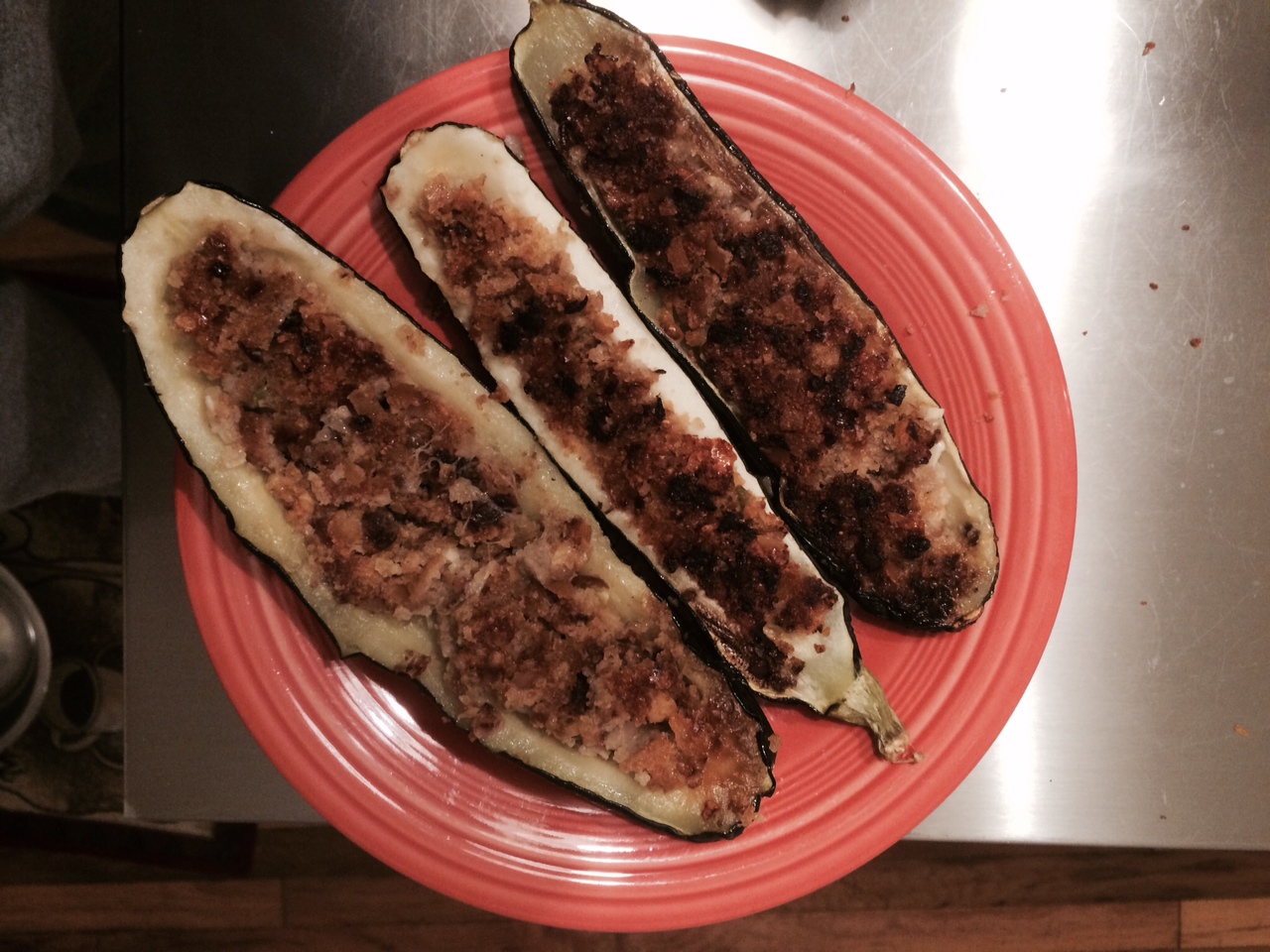
The second picture above is of stuffed and cooked ‘Vegetable Marrow’ from my garden.  The English prepare the dish by stuffing the fruits with bread crumbs, onions, nuts and sometimes sausage.  I must say it was absolutely delicious, with a very mild flavor and soft texture.  I plan to grow it every year: it is a fairly small, bushy plant, produces early and heavily and tolerates cool as well as warm weather.  The first fruits should mature in about 55 days.  The plants in my garden grew to about three feet in all directions.

The third picture above is of ‘Boston Marrow’.  It is a member of the Cucurbita maxima species, which originated in the Andes.  This species also includes buttercup, Hubbard and banana squashes, among others.  A nineteenth century seed catalog from D.M. Ferry lists ‘Boston Marrow’ and gives a good description, “Of oval form; skin thin; when ripe, bright orange, flesh rich salmon yellow, very dry, fine-grained and for sweetness and excellence, unsurpassed; a very popular variety in the Boston Market.”  Peter Henderson (1865) considered it as a “second early” squash, after ‘Yellow and White Scalloped’ and ‘Summer Crook Neck’.  This variety was the first squash to ripen in my garden; the plant grew very fast and eventually reached about eight feet in width and length and about four feet in height.  The plant likes full sun if possible and good air circulation.  The squash fruits are keeping well, but I have not cooked any yet.

If you are saving seed from squashes, remember that the four species of squash will cross with one another , except that C. maxima does not cross with C. mixta or C. pepo.  This means that to keep an heirloom or any open-pollinated variety true each kind must be isolated (grown separately) by 1 1/2 to 2 miles, unless you have plantings of one variety each of C. mixta and C. pepo, which cannot cross-pollinate.


Heirloom Potatoes

Standard

photo (43) photo (44) photo (47) photo (46)

Potatoes are native to the Americas where they were an important food in ancient times.  In the area once ruled by the Inca civilization hundreds of varieties of the common potato, Solanum tuberosum, were developed before colonization in the 1500s.  A limited number of varieties of potato arrived in Europe soon after.

The first illustration above is from Gerard’s The Herball of 1596 and depicts a plant and tuber of the sweet potato, Ipomoea batatus.  He mentions that the plants he grew originated from stock collected in Peru.  His plants did not flower and died when frosts killed them, causing the tubers to rot.  As sweet potatoes are a tropical plant they rarely flower in cool, northern gardens and have to be harvested before hard frosts.  Gerard also mentions the use of sweet potatoes as food: it is interesting that so long ago people boiled them with prunes, or roasted them with hot coals.

The second illustration is also from Gerard’s Herball and shows the common, starchy potato.  He obtained the plants from Virginia.  He mentions boiling the potatoes and serving them with vinegar and oil, and discusses roasting them.  The general cultivation of potatoes in Europe was delayed through the sixteenth and seventeenth centuries, because the plants closely resemble poisonous nightshade.  (Tomatoes, potatoes, eggplant and nightshade are all members of the Solanaceae family of plants).  The Royal Society of London experimented with growing and eating potatoes in the seventeenth century; they realized potatoes would be an excellent, productive food for the poor.  Something was needed at the time to supplement periodic losses of grain crops.  

Potatoes arrived in Ireland early, possibly introduced by Sir Walter Raleigh.  Because of their productivity, nutrition and adaptation to the cool climate, potatoes soon became popular in Ireland. This situation continued for generations as potatoes became the food staple in Ireland; often poor people had only potatoes to eat.  A problem arose in the 1840s with diseases increasing, affecting almost all of the potatoes grown there.  Grain was commonly exported from Ireland at that time, so there was little to eat.   Starvation became widespread and more than one million people died.

One reason for the extent of the blight is that only three clones of potato were grown in Ireland at that time.  This situation highlights an important factor in food production: a need for diversity in cropping.  This is one vital reason to save open-pollinated heirloom vegetables and antique fruit and flower varieties for future generations.

As a result of the Great Potato Famine, new disease resistant varieties were sought.  A reward of $10,000.00 was offered by the Commonwealth of Massachusetts to anyone who discovered a potato resistant to diseases.  The third picture above is of ‘Garnet Chili’ potato from 1853, produced by Reverend Chauncy Goodrich of New York.  He crossed several locally grown potatoes with a variety brought to the U.S. from Chile to create the truly blight-resistant ‘Garnet Chili’.  It is still available today from specialist growers.  I plan to grow ‘Garnet Chili’ in 2016, along with ‘Green Mountain’, dating to 1885, and ‘Irish Cobbler’, from 1876.  All of these varieties keep well, are productive, nutritious and disease resistant.

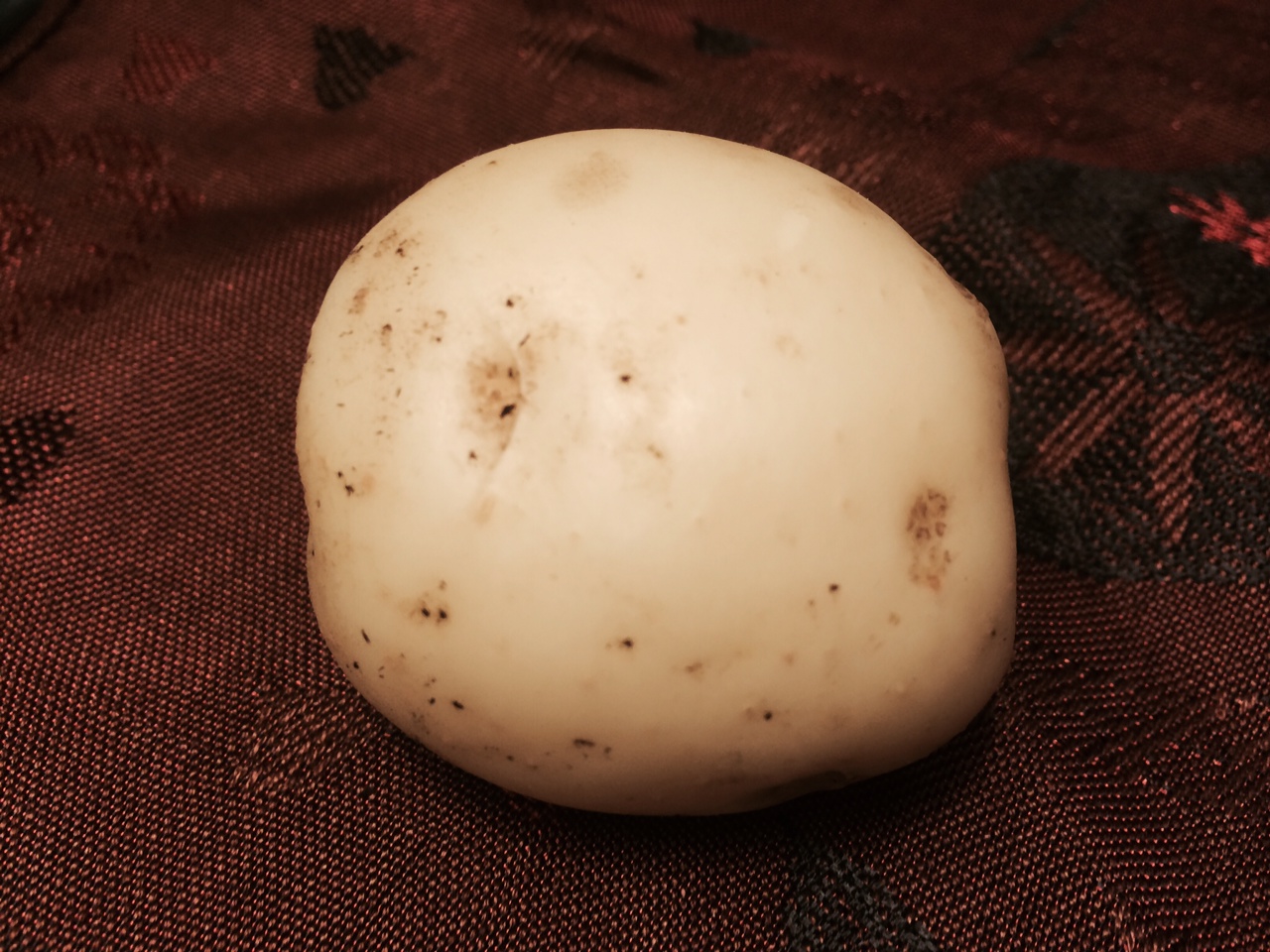
The last picture above (in color) is of ‘Irish Cobbler’ from my garden.  The plants produced well this summer, though the tops died early, perhaps because of our unusually hot summer this year.  ‘Irish Cobbler’ makes excellent boiled, roasted and mashed potatoes.  As a baked potato the texture seemed a bit too mealy; another variety might be superior for baking.   I recommend trying and preserving these antique potatoes.  To keep them from year to year, plant them in a different location each year, with at least a four year rotation.  Destroy any diseased plants right away and replant the best tubers typical of the kind you are saving.  Store them unwashed in a dark place at 40 to 50 degrees with about 90% humidity.  Good air circulation is important, so put them in boxes or sacks.  They should keep for five to six months, but check for rot every so often.

China Asters

Standard

photo (40) photo (41) photo (42)

Annual China “asters” are not classified in the genus Aster by modern botanists, but are so-called by gardeners.  Today they are classified botanically as Callistephus chinensis.  Seed was brought to Europe from China by French missionaries in 1728.  By 1731 Philip Miller was growing them in England, and John Custis of Virginia mentions China asters in the year 1735.  In the late eighteenth century potted plants of China asters in flower were sold by the thousands in France.  The French referred to them as “Reine Marguerites.”

In the nineteenth century several types of China asters were grown.  Shirley Hibberd, a British author, in his 1871 gardening guide The Amateur’s Flower Garden, considered the best seed strains to be ‘Peony-flowered,’ ‘Chrysanthemum-flowered’ and ‘Quilled.’  At that time many different strains were available that have since disappeared, including two types with striped flowers.

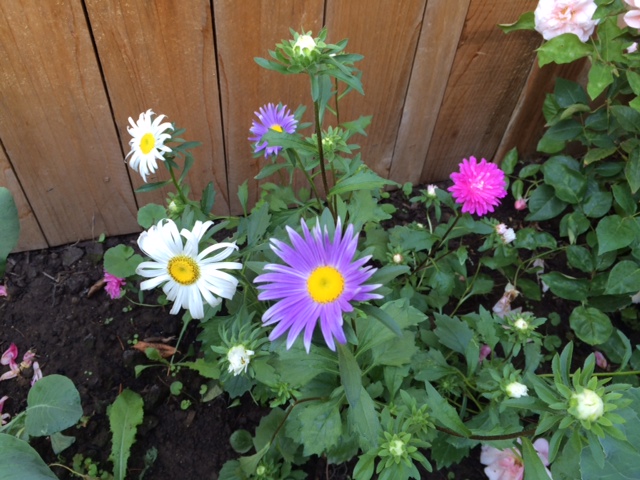
This year I grew a strain of China asters from about 1900 named ‘Crego Mix’.  The colors are beautiful and clear, the flowers single to double and they are great for cutting.  The plants of this variety grow about 24 inches tall.  Another antique strain, ‘California Giants’ from 1899, is also available today.

The culture of these plants is not difficult.  Seed can be direct-sown about the time of the last frost if your season is not too short.  Another option is to start them inside at about 68 degrees, then transplant when one inch tall into flats.  Plant out when three inches tall, about six inches apart.  An important detail to remember is to plant China asters in different places in the garden each year; this is a similar rotation as is used for vegetables, so three or four years must elapse before they are planted in the same location.

China asters make truly beautiful cut flowers; my aunt sold them in bunches at a farmer’s market in Montana for several years.  She grew them in long rows.  I do recommend growing these lovely flowers!  Seed can be saved and planted the next year to preserve the antique varieties.

‘Phoenix’ Nasturtiums

Standard

photo (36) photo (37) photo (38) photo (39)

Nasturtiums have been grown in gardens for centuries in Europe and America.  The first species known in Europe was collected from Peru.  It was grown by Gerard and is illustrated in his Herball dated 1596; modern botanists call it Tropaeolum minus.  He named the species Nasturtum indicum and his illustration showed a plant wound about a stake.  The plants he grew had yellow flowers.  He mentions that some people of his time thought nasturtiums to be a form of bindweed, which means they had a somewhat vining habit.  Gerard writes “…one plant doth occupie a great circuit of ground, as doth the great Bindeweede.”   In Gerard’s time nasturtiums were considered a warm season vegetable, with the virtues of the various kinds of cress.  In most literature on nasturtiums, T. minus is described as growing only 12 inches to 18 inches high and across, while T. majus is said to reach six feet wide.

Tropaeolum majus arrived in England sometime in the 1600s.  It was likely to have been used for its flowers rather than as a vegetable.  T. majus grows into a larger plant than T. minus and has a distinctly vining habit.  Hybrids with the two above species and T. lobbianum extended the color range and variety available over the centuries.  Once there were several dwarf  “Tom Thumb” varieties, but they seem to have disappeared.  The oldest varietal seed strain I could find is ‘Empress of India’ dating to 1889.

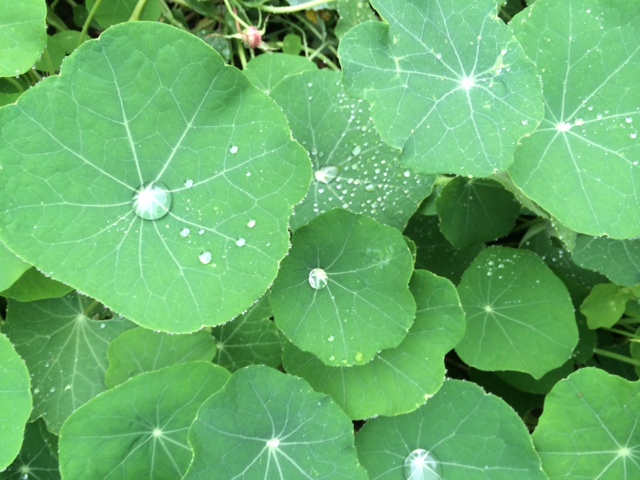
This year I grew a rare surviving seed strain of nasturtiums from the 1890s named ‘Phoenix’.  Its flowers are illustrated in the first photo above. This strain produces a mix of bloom colors in beautiful warm shades splashed with darker colors as in T. minus.  The flowers have beautiful serrated edges.  The catalog I purchased seeds from listed ‘Phoenix’ as an example of T. minus, but I believe it to be a hybrid between species, for its plants are very large.  This heirloom variety is open-pollinated.  In third photo above I show newly planted ‘Phoenix’ nasturtiums, as a border on the left square bed.  In the fourth photo I show how large the plants are now, October 25th.  Some runners from the plants reached six or seven feet.

I recommend trying ‘Phoenix’ nasturtiums and also suggest you save seeds, for the variety is very rare.  Also, be sure to give the plants a lot of room; perhaps three to four feet in all directions.  Hanging baskets made with these and antique blue Lobelia erinus ‘Crystal Palace’ from 1867, might be quite beautiful.


Balsam, An Heirloom Annual

Standard

photo (31) photo (32) photo (33) photo (34) photo (35)

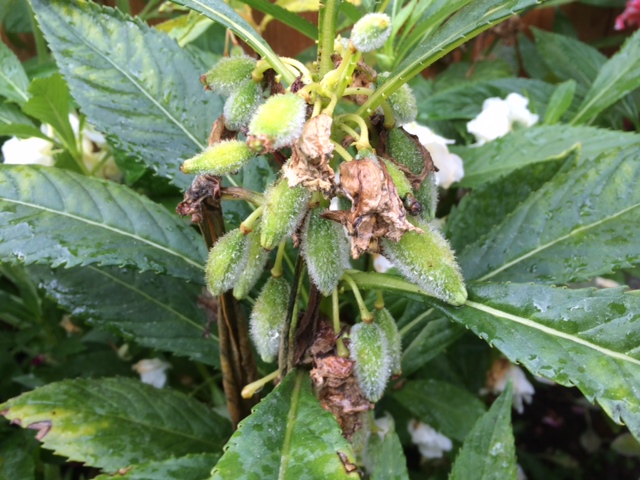
Impatiens balsamina, a flowering annual, has been grown in gardens for many centuries.  It is native to India, China, and Malaysia and reached Europe as early as 1542.  The woodcut directly above is taken from Gerard’s Herball of 1596.  It is a good representation of the seed pods which appear on the plants as the end of their season.  Above the woodcut, I have included a photo of the seed pods from my own garden.  Early gardeners and botanists thought balsam was related to cucumbers because of the similar seed pods.  Gerard lists at least eight names by which the plant was known in his day and that is an indication it probably was widely known and grown.

The first mention of balsam in America is from 1760 by J. Townley in The Boston Evening Post, March 31 of that year.  In the early eighteenth century only single-flowered varieties of balsam were available.  Double forms appeared in 1768 as mentioned by Philip Miller in his Gardener’s Dictionary.  His seed came from the East Indies.  The color range available increased and balsam was a popular garden plant.

I grew an antique Victorian seed mix this season dating to 1863 named “Camellia flowered”.  The flowers are large and mostly double, with a wide color range (the first three photos above show several different colors).  The individual flowers are beautiful and really look like miniature camellias.  This seed strain was very popular in the nineteenth century.

Balsam is a heat-loving annual and enjoys warm summers.  Early gardeners started seeds in hotbeds in frames made with fresh manure.  As the manure aged and composted it heated, thereby providing a warm environment for the young plants.  The plants were then set out into the garden after all danger of frost had passed.  Today, we can start balsam indoors in warm conditions in a greenhouse or under lights at about 77 degrees.  After the seedlings are large enough to transplant, it is best to put them into individual pots as they grow fast.  Balsam enjoys regular water in pots and in the garden, so cannot be considered drought tolerant.  The plants seem to like about as much water and similar temperatures as do tomatoes.

Here in Oregon we had the hottest summer on record and my balsam plants did very well.  I grew them in Montana in the 1980s, but the cool nights, short season and dry air really shortened their bloom season.  Though related to the commonly grown impatiens, balsam grows best in full sun.  I definitely recommend trying balsam in your garden, for they are not often seen today.

Some Ancient American Vegetables

Standard

photo (25) photo (26) photo (27) photo (28) photo (29) photo (30)

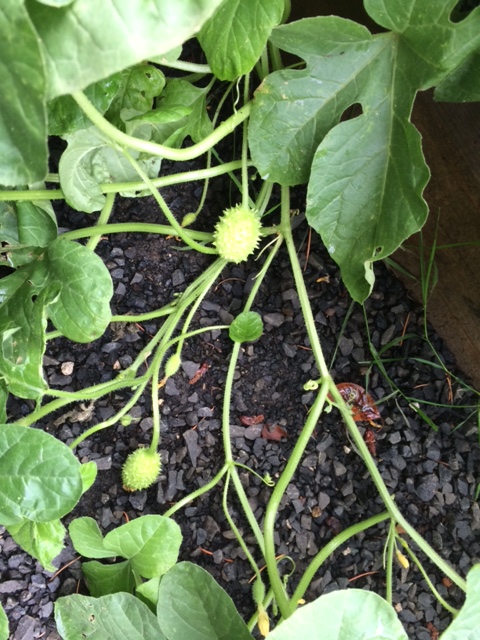
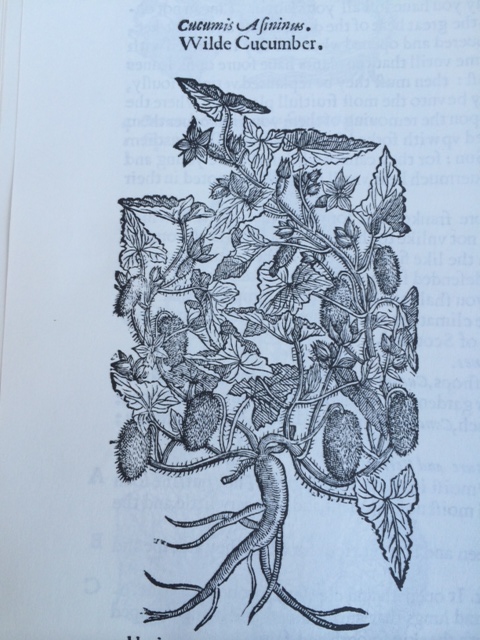
This year I grew some very old heirloom vegetables.  The first picture above is a photo of my plants of ‘Jamaican Burr Gherkin’ a cucumber from Jamaica, originally from West Africa.  The seed company I purchased the seed from gave a date of the 1500s. The fruits are small, spiny, with a mild, slightly tangy flavor and began ripening in about 70 days.  This variety is excellent for pickling.    A plant with similar, spiny fruit is depicted in a woodcut illustration in Gerard’s The Herball published in 1596 in London, as ‘Wilde Cucumber’.  The leaves in his illustration, however, are not deeply cut and lobed as they are in ‘Jamaican Burr Gherkin’, but have a slightly jagged edge.  They are more similar to what Gerard shows as ‘Citrull Cucumbers’.  The citrull cucumbers are early yellow cucumbers with watermelon-like leaves, just as those of ‘Jamaican Burr Gherkin’.

The third illustration is my photo of ‘White Scallop’ summer squash.  This squash is excellent baked or fried and has flat fruit with scalloped edges.  It is known to be a Native American variety.  Gerard provides a nice illustration of what is probably the very same plant.  He calls it ‘The great Buckler Pompion’ (fourth illustration).  The growth of the plant is very large, maturing early.  It continues to bloom and set fruit for a long period.

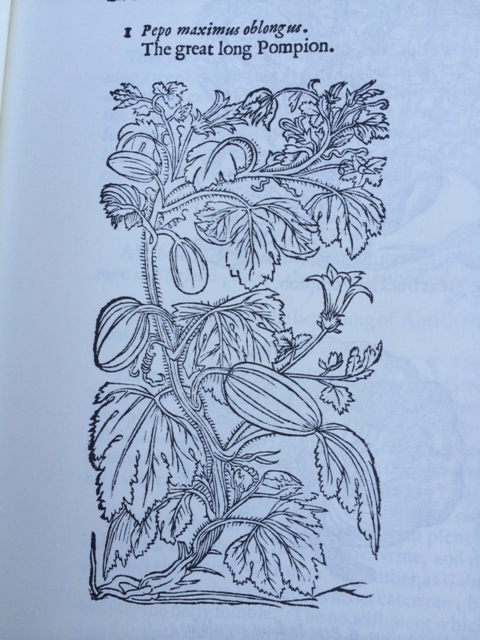
The fifth illustration is my photo of ‘Long Pie Pumpkin’ known since at least 1832 in New England.  It the garden it spreads quite a distance, has large, deeply cut leaves and seems to continue to bloom and set fruit a long time.  This variety can be picked while still green and will ripen in storage.  It is rather rare today.  Gerard shows a somewhat similar variety in a woodcut labeled ‘The Great Long Pompion’.  In his description, he says the meat next to the rind is white, and the interior spongy and slimy.  He mentions that the fruit ripens green or gray, while our variety ripens orange.

It is important to preserve these ancient heirloom vegetables that are so rare today.  They are all open-pollinated, so seed can be saved for next season.  If you do save seed, be sure to research about seed cleaning, saving and storage and check the isolation distance required to prevent cross-pollination with other varieties, which would dilute the genes of the variety you re trying to preserve.


Some Heirloom Cucumbers

Standard

photo (22) photo (23) photo (24)

This season I grew several heirloom cucumbers.  All of them are open pollinated so seed can be saved and planted next year.  The first of my cucumbers to ripen was ‘Boothby’s Blond’ (top photo) a variety handed down over generations by the Boothby family in Maine.  The date is unknown, but I would guess nineteenth century.  It is a lemon-type, rather small, but quite mild and delicious.  The plants produced well and began early.  One failing is that the plants developed powdery mildew earlier than other varieties, and this eventually weakened the plants causing them to slow production.  My garden is in shade for the first half of the day and that is part of the problem.  I garden organically and use a soap spray to control mildew.  It slows down the spread of mildew, but does not kill it.  Anyway, I would recommend growing ‘Boothby’s Blond’ cucumber.  It is great tasting, early (50-60 days) and productive.  Just try to give it as much sun and air as possible to prevent disease.

Another good heirloom cucumber I grew this year is ‘Parisian Pickle’ from 1880 (middle photo).  This variety is listed to mature in 50 days.  Now that is true if you pick the cucumbers small, which you might want to do because the fruits grow large quickly.  We used this variety for slicing and were about to make pickles when rats appeared and ate all the cucumbers in the garden.  I suppose they are traveling all over town trying everyone’s cucumbers.   ‘Parisian Pickle’ is very productive and fast-growing, but the leaves also developed powdery mildew a couple weeks after ‘Boothby’s Blond’.

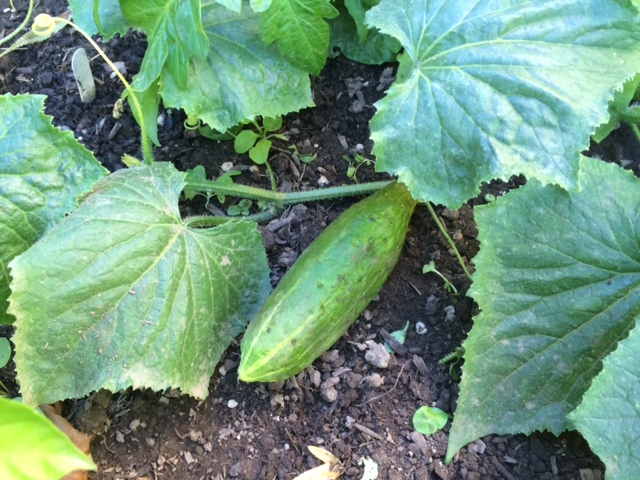
In the bottom photo is a cucumber grown since the era of the Oregon Trail, 1830-1869.  It is ‘Long Green Improved’ from 1842.  It is listed as maturing in 70 days, but I found it to be ten days earlier.  (This could be due to weather; we had the hottest summer on record here in Oregon).  The skin of the fruit of ‘Long Green Improved’ cucumber has few spines so is smoother-skinned than the previously mentioned varieties.  It is an excellent slicer with mild flavor that can be used for pickling when picked small.  Best of all, my six plants of this variety still show absolutely no mildew on October 5.  That means this variety will tolerate slightly shadier or more close conditions than the other two.  The fruits will grow to 12 inches or more if allowed.  This is a great variety that should be saved from extinction.   Why not try it next season?

Antique Zinnias

Standard

photo (19)photo (20)photo (21)

The first zinnia species introduced to the United States was Zinnia elegans from Mexico in 1793.  It was a single form; double forms were introduced in 1858.  Zinnia haageana, another Mexican species was introduced in 1876.  A nursery catalog from 1876 sent out by Henry H. Dreer of Philadelphia describes Zinnia haageana as “A double variety of Zinnia mexicana; flowers deep orange, margined in bright yellow.”  These species were crossed together and a wide color range created, as well as new flower forms.  Few old seed strains exist today; the oldest hybrid seed strains I have located are the ‘Cactus’ mix from 1928 and the ‘California Giants’ mix, also from 1928.

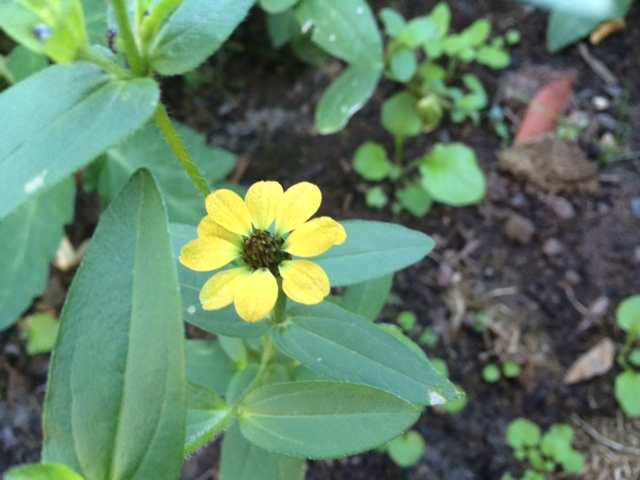
In the photos above, the red semi-double zinnia is one I grew this season, of the variety ‘Will Rogers’ from 1940.  The flowers of this strain are most often semi-double, but sometimes fully double.  The flowers are a beautiful warm shade of red.  The other two pictures above show the much smaller flowers of Zinnia peruviana, a species from Mexico with a range extending into South America.  These come in earthy yellow and red shades.

Zinnias can be started indoors if you need to start them early and in areas with cool or short summers transplants can be set out after danger of frost has passed.  The seedlings will need plenty of light in all stages of growth (inside, too) so they will not become thin and floppy.  Seeds can be direct sown about the date of the last frost or later if your season permits.  Zinnias enjoy heat and sun.  Some of the most prolific plants I have seen were grown in the desert Southwest, but they seem to do well in most of the U.S.  Why not try one or two older seed varieties of zinnia?

The Development of the Florist Pansies

Standard

photo (13) photo (15) photo (12)photo (16)

Pansies were developed in England in the early 1800s.  One Lady Mary Bennet, the daughter of the Earl of Tankerville made a heart-shaped flower bed in her garden at Walton-On-Thames, Surrey England, about the year 1812.  She collected wild specimens of Vila tricolor, known as “heartsease” and planted them together in the bed.  Her gardener, a Mr. Richardson, began saving seed.  The resulting plants attracted attention and soon Mr. Thompson, gardener to Lord Gambier began growing and selecting seed from both Viola tricolor and Viola lutea, another species native to Britain.   In 1830 Mr. Thompson discovered a seedling that had a small patch of color in the center of the bloom.  This is what gives the pansy a “face”.  Pansies as we know them today descend from this color breakthrough.

In nineteenth century England and Scotland enthusiastic garden hobbyists grew and developed several types of flowers, among them primroses, carnations, tulips and ranunculuses.  These very serious folk were known as “florists”.  They grew their own plants, traded and purchased choice cultivars and raised new plants for show from seed.  The flowers of each type of plant were required to conform to a set of rules for exhibition.  Outstanding varieties were named, exhibited and often propagated by cuttings and by 1835 more than 400 named varieties of pansy had been created.

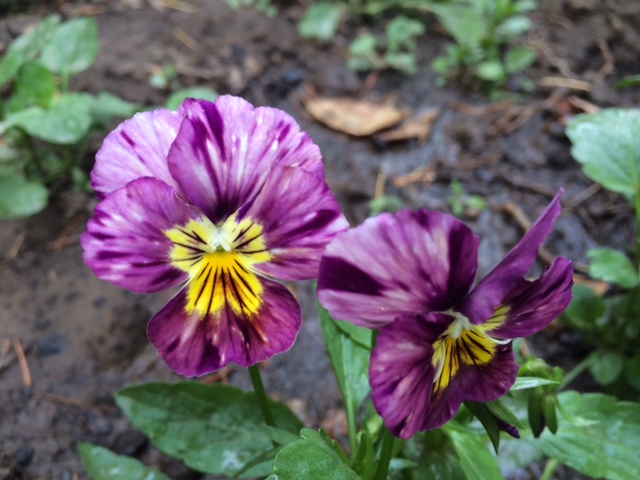
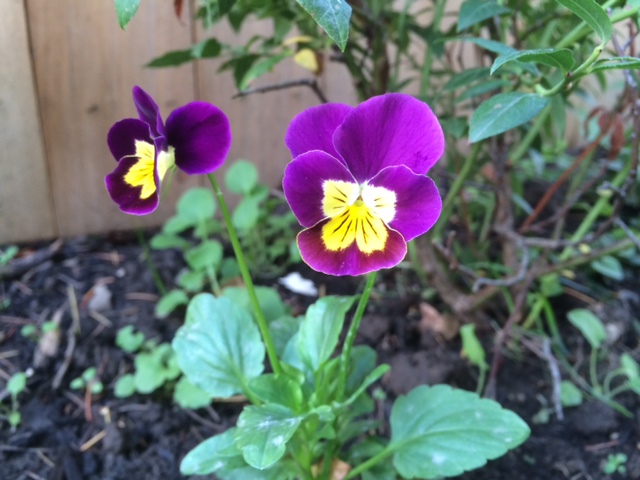
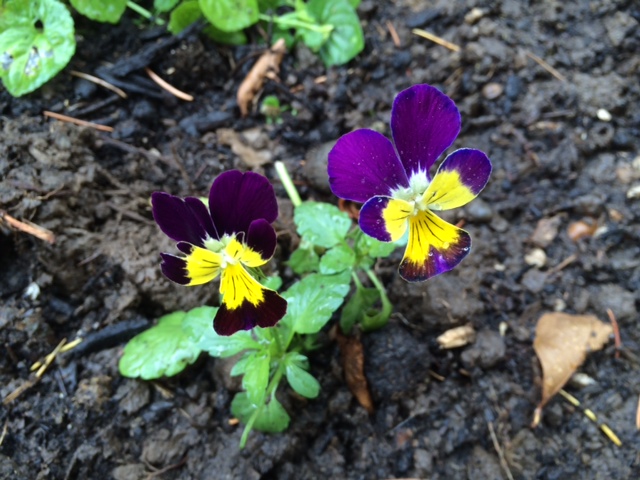
Pansies are short-lived perennials and very few of the old show varieties are in existence today. Today most pansies are grown from seed.  The photographs above are of plants I grew from an English seed mix developed from the few remaining florist pansies left in existence.  Their flowers are larger than those of Viola tricolor, but smaller than modern pansies.

Pansies enjoy cool weather and thrive in climates with cool summers.  I have grown them in the cold climate of Montana, the coastal climate of Washington state and in the winter in the desert at Palm Springs.  Their culture is the same as for Viola tricolor.  Seeds of the old strains of pansy can be sown in winter inside for summer flowers, or sown in fall to flower in early spring until it gets too hot.