GROWING VEGETABLES IN CONTAINERS

Standard

IMG_0677 IMG_0678

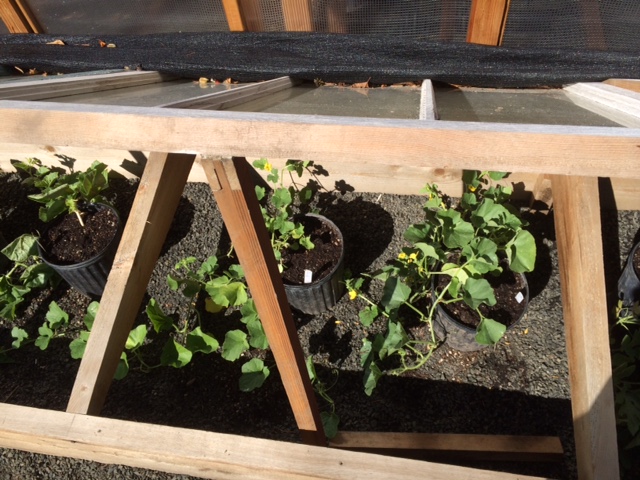
My pictures show heirloom French cantaloupe ‘Prescott Fond Blanc’ and ‘Ananas D’Amerique a Chair Vert’.  The containers were too small to mature the fruit, so I repotted them into much larger 24″ by 24″ pots.  The frame helped ripen the fruit in the climate of cool western Oregon. 

Raising vegetables in containers is an excellent option for those of us who are living in a dwelling temporarily, are short of space, or have poor soil.  Containers are useful and versatile; pots can be moved around if a location is too hot, windy or shady.  Plants that enjoy heat, such as melons, squash, peppers, tomatoes and eggplant can be placed in front of a warm south or west wall to ripen faster.  Also, if spring cold weather threatens, pots may be moved inside overnight, or even a few days for protection.  The same advantage applies to the fall season; if weather turns cold and your crop is not yet ripe you can bring pots inside.    

Containers for vegetables should be at least 12 inches by 12 inches for a single tomato or eggplant, but much larger containers are needed for melons, squash and pumpkins—at least 24 inches by 24 inches for each plant.  Smaller crops, such as carrots, beets, broccoli, cabbage, Swiss chard, spinach, lettuce, etc. need a container at least 10 inches deep, and yields are better if the pots are 24 to 36 inches wide.  For peas and beans, some gardeners have good success with containers shaped like long rectangles, perhaps 12 inches wide by 48 inches long and 10 or more inches deep.   It is easier to move your containers around if you have them on rollers.  And if you build your own containers, use non-treated water-resistant wood such as cedar, redwood or cypress.  The new fabric containers are useful, reusable and inexpensive, but cannot be moved during the season. 

The soil mix for vegetables should be rich, moisture-retentive, but quick draining.  Plant roots need air to thrive.  I use a mix of two parts organic potting soil, one part rotted manure or compost, and one part perlite or sharp sand.  Consistent, frequent applications of manure tea, liquid seaweed or a complete organic fertilizer will keep your vegetables growing well. 

Watering is very important when growing in containers.  Check plants every day all season long.  If weather is hot and the plants are large, you might have to water two or three times a day.  Automatic drip watering systems are an option if you will be away for a few days. 

When planting seeds, follow directions on the package and read about how to care for each vegetable.  “Patio”, “bush” or dwarf varieties of vegetables are good choices for containers.  They tend to be compact, productive plants with normal size or slightly smaller fruit.  Vegetable seeds that can be planted now (July) include: lettuce, spinach, peas, radishes, carrots, corn salad, and Swiss chard.  Plant starts of cabbage, cauliflower, broccoli and kale can be planted now for late fall harvest.  Starts of tender vegetables that can be planted in containers now include: tomatoes, squash, pumpkins, cantaloupe, watermelon, eggplant and peppers.
Moving the Heirloom Garden to Montana

Standard

FullSizeRender (2) IMG_2404 IMG_2433 IMG_2545 (1)

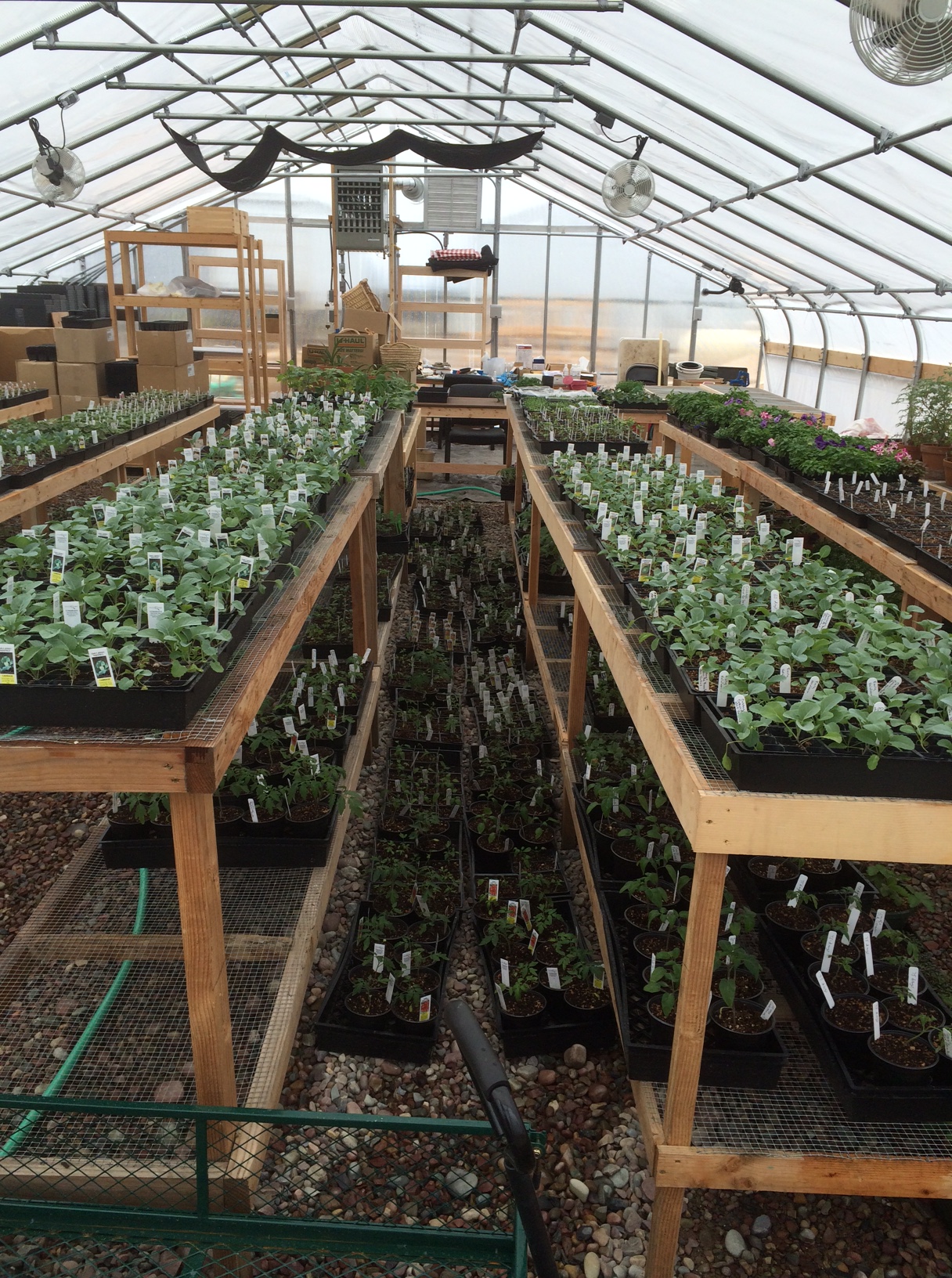
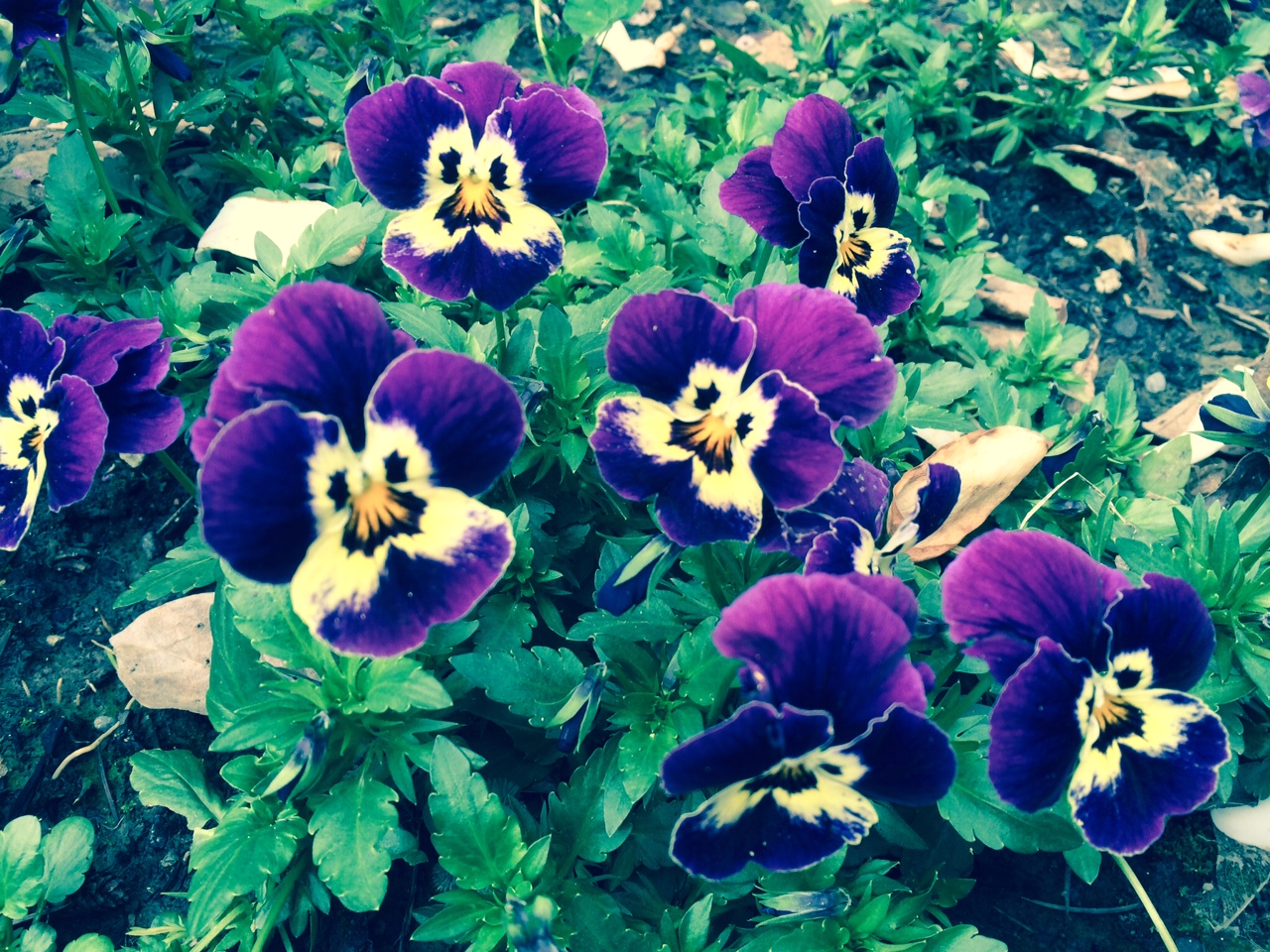
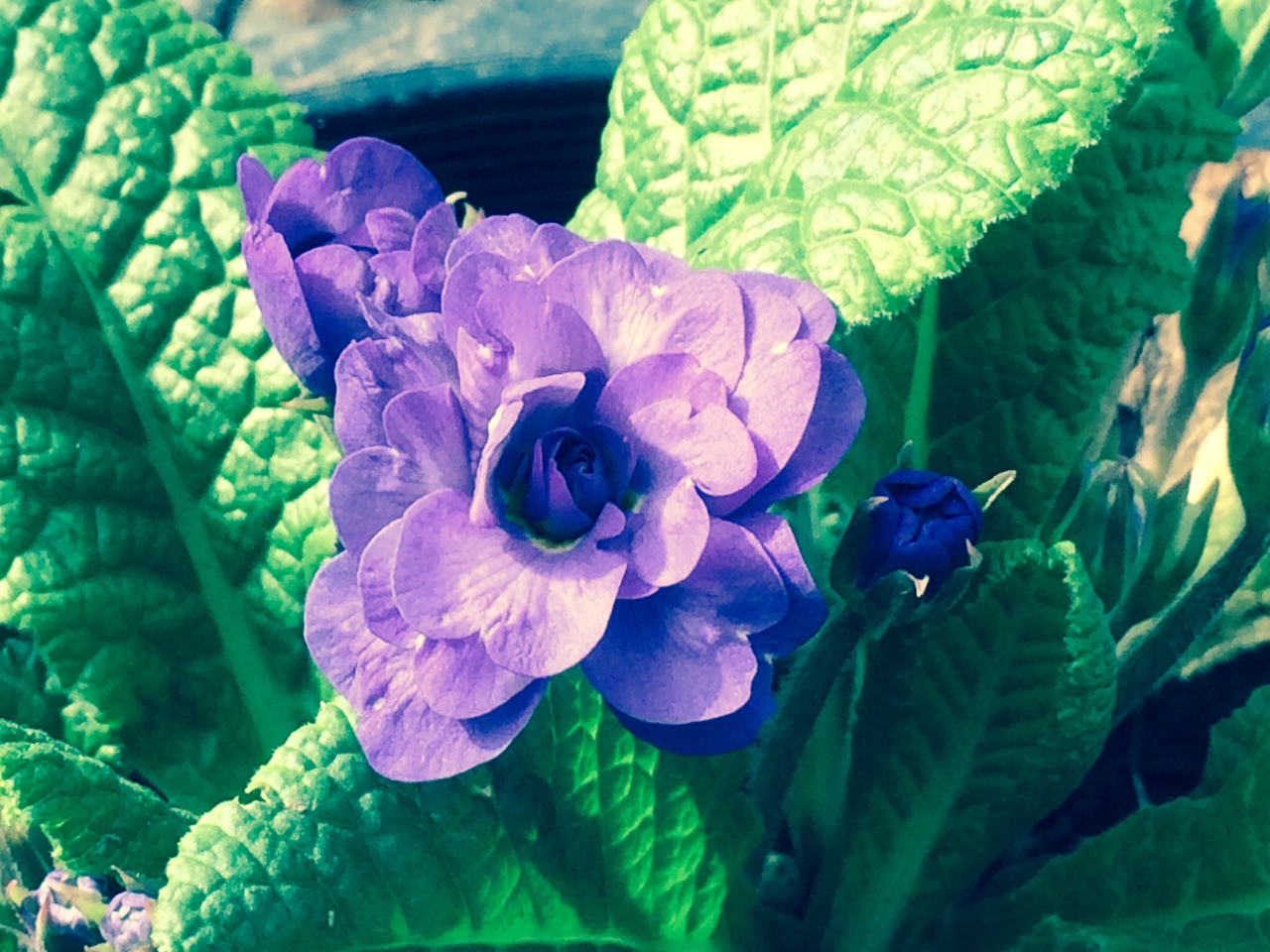
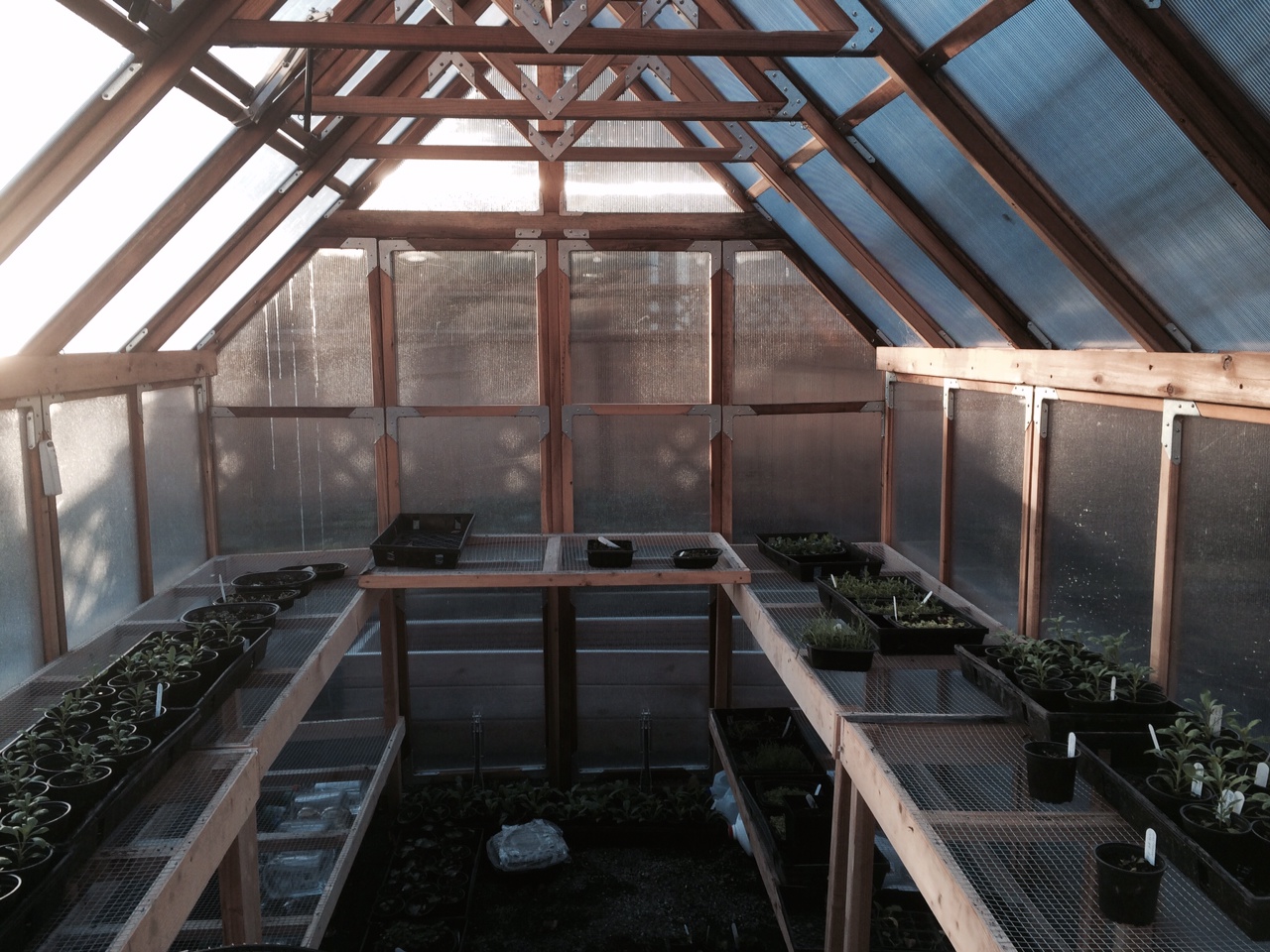
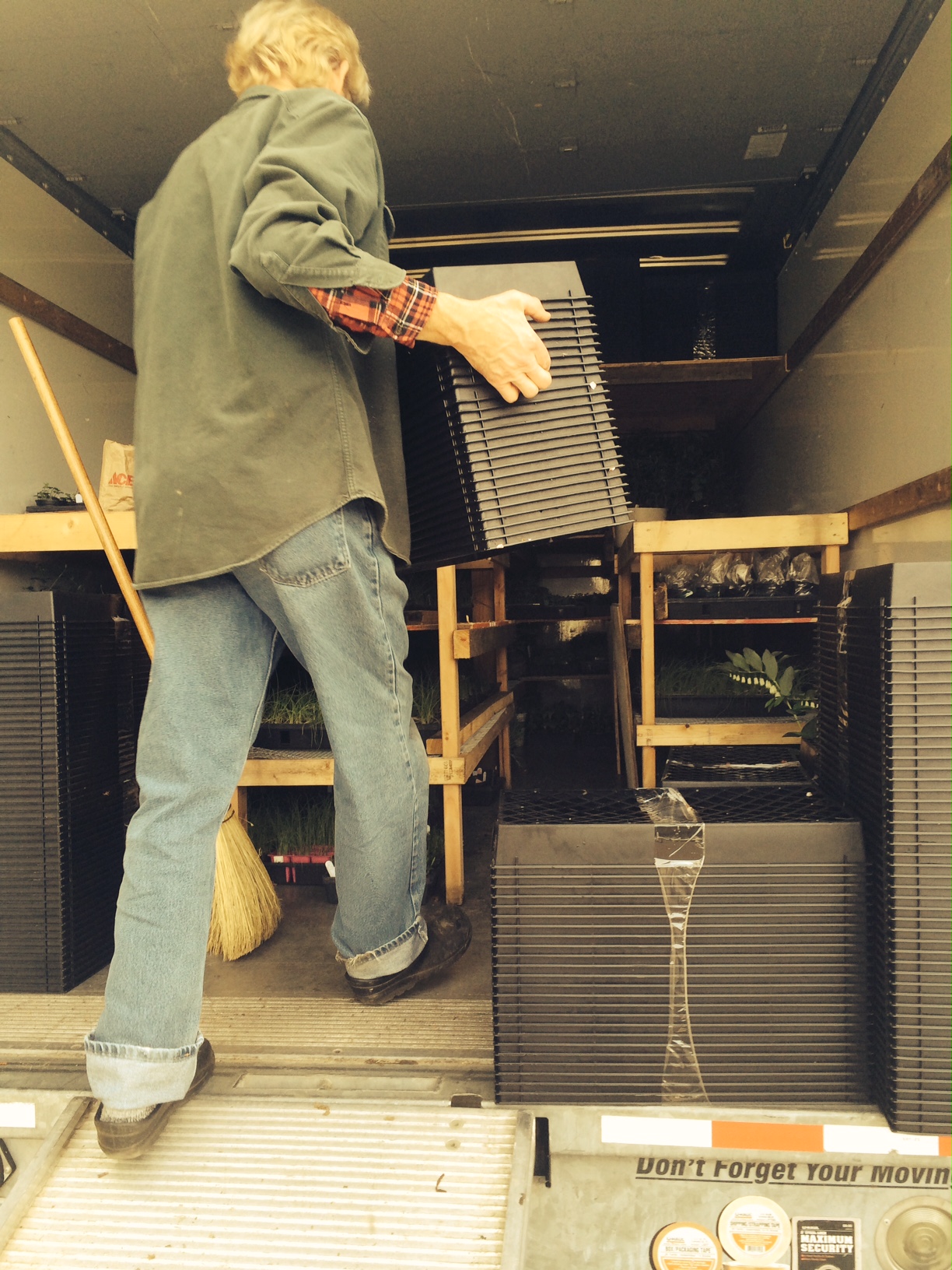
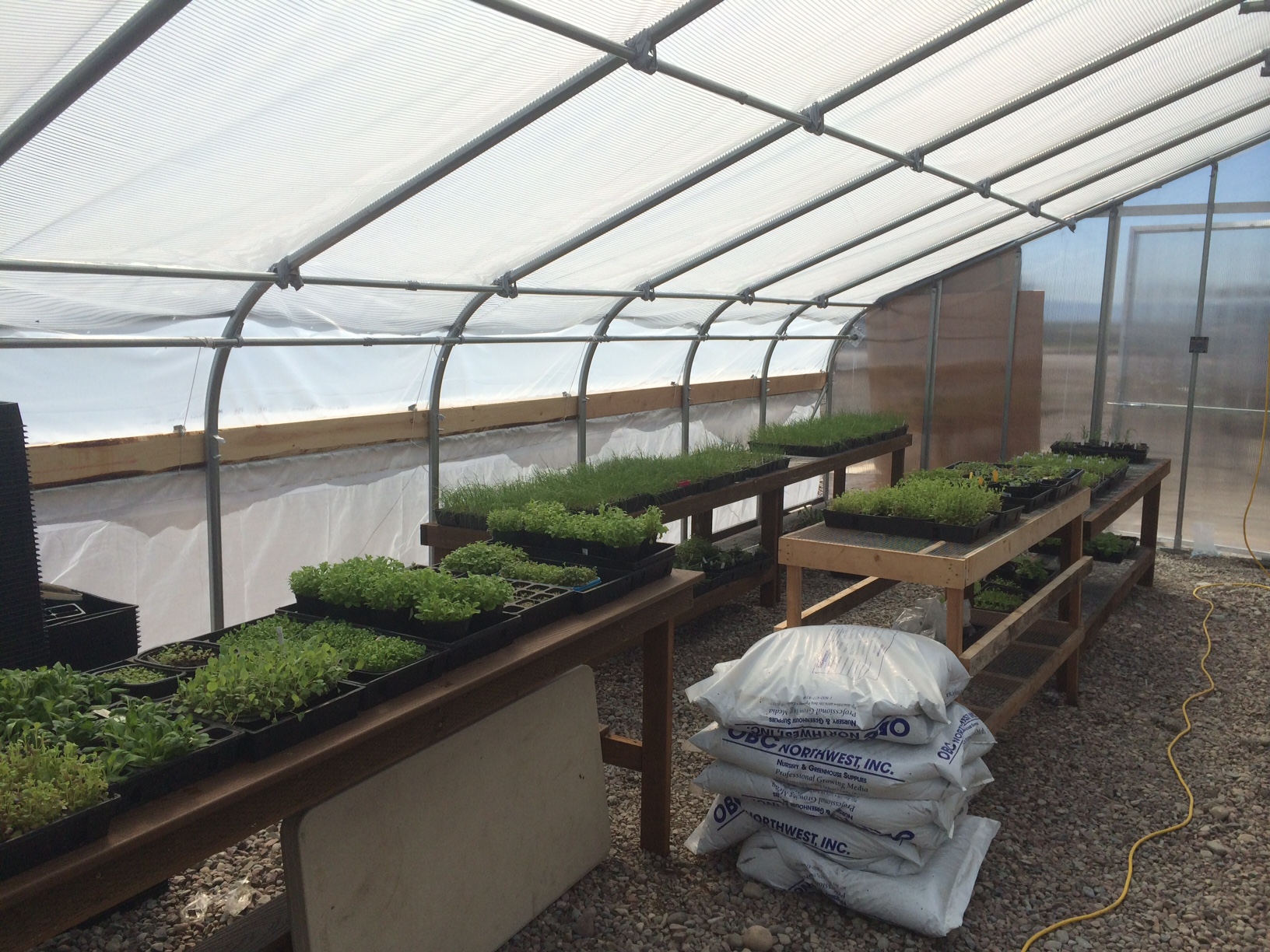
Hello everyone!  I have been moving our garden of heirloom plants to Ronan, Montana, where I will be joining the staff at Westland Seed, Inc. as greenhouse/nursery manager.  The pictures above show our progress.

We will have our grand opening May 20th and 21st!  All our plants are grown using OMRI certified soils, fertilizers and management techniques.  We feature heirloom plants from the pioneers in America, old varieties from Europe, Asia, the Pacific Isles; things from all over the world. of special interest are more than 30 varieties of Native American vegetables and flowers.

Our soil mix is made from a certified organic composted buffalo manure, with other certified organic ingredients added.  (see our previous posts on soil mixes for ideas.)   The potting mix we amend for our bedding plants and vegetables is produced by Buffaloam Company; made from the manure of grass-fed bison, composted for three years.  It is an odorless, friable medium we like.  This primary ingredient is especially appreciated here on the Flathead Indian reservation as it reflects our ancient Native American heritage.

In future posts, I will describe some of our featured heirloom vegetables and flowers.  Almost all of our greenhouse and nursery plants are heirloom, open-pollinated varieties.  We also offer native and medicinal plants  We do NOT offer any GMO plants or seed in our greenhouse nursery.

I will be posting this blog on the Westland Seed website, on the Greenhouse Page, along with future instructional and informational videos, plus an event calendar.  The Westland Seed website is http://www.westlandseed.com

April Gardening Calendar

Standard

photo (133)

April is another busy month for gardeners; usually a month characterized by ups and downs in temperature.  Keep watch for frosts; protect cold frames with mats if frosts are imminent, and admit air daily as weather permits.  Finish pruning fruit trees if not done, plant grapes; fertilize and prune blackberries.  Check your fruit trees and roses for pests as soon as they bud and leaf out and set out apple pest traps two weeks before bud break.  Weed and amend all your beds now while it is cool and moist.

Finish planting fruit trees, shrubs, roses, and perennials.  This month is a good time to direct sow (where they are to flower)seeds of several flowers: sweet alyssum, cornflowers, carnations, pinks, poppies, stocks, rose campion, Lychnis, columbines, valerian, honesty, foxglove, snapdragons, mignonette, larkspur, kiss-me-by-the-garden-gate and four-o’clocks.  Perennials still may be divided if weather has not become too warm.  Violets can be divided after blooming and cuttings taken of pansies.  Make cuttings of chrysanthemums, gauras, Helianthus, lupines, Lychnis, Liatris, knautias, saponarias, scutellarias and veronicas.  Dahlias and tigridias may be started inside in cold climates and planted out later after frosts are over, or planted outside if the soil temperature is above 60 degrees F.

Several vegetables can be direct sown if weather permits and it is not too cold: beets, arugula, carrots, caraway, celery, chervil, chives, cilantro, dill, fennel, collards, mache, fava beans, cress, kale, Jerusalem artichokes, kohlrabi, leeks, lettuce, mustard greens, rhubarb, turnip greens, onions, pasley, parsnips, peas, potatoes, radishes, salsify, scallions, spinach and Swiss chard.  Sunflowers and tomatillos can be sown two weeks before the last expected frost.

Corn may be sown after April 15th in cool maritime northwest climates, or a week or two later in the inland and mountain areas.  Usually corn is sown about 10 days to two weeks before the last frost.  Native Americans of the Hidatsa tribe living in the Dakotas planted sunflowers first, then corn, and after frosts followed with beans and finally, squash.  Sunflowers were grown by themselves in a field, but corn, beans and squash were grown together; with corn in hills of 6-8 and beans and squash vining through.

Vegetables started last month indoors may be planted out this month: the brassicas, parsley, Asian greens, rhubarb and tomatoes; once frosts are over.

Prune established roses before bud break and seal the cuts with water-based glue or wood glue.  This prevents drilling wasps from injuring the canes.  Fertilize organically with Epsom salts, manure or compost, bone meal or rock phosphate, alfalfa meal and seaweed or wood ashes.

A few things maybe grafted now: grapes, hollies, pears, maples, pines and clematis.  Layers can be made of Cotoneaster, Cotinus, Hydrangea, Lavandula, Lonicera and Parthenocissus. 

Enjoy spring!

Starting Seeds Indoors

Standard

photo (127) photo (128)

Many of us get a good feeling from planting seeds and watching them grow when outside it is still dark and cold.  But inside, we are planning for spring planting.  We can start the varieties we want—perhaps a favorite is not available locally as a transplant or as seed; we can raise it ourselves from seed!

Most everyone I know has good luck starting seeds in a sterilized seedling mix.  It may be difficult to find an organic seedling mix; and it must be sterile or seedlings might dampen off from fungi present in the air and abundant in unpasteurized soil mixes.  A mix I make is soil free: 6 parts sterile (pasteurized)peat moss + 3 parts fine perlite + 1 part washed coarse sand.  If you are unsure if your mixture is sterile or not the mix may be heated in an oven at 160 degrees for one hour.  Do not allow the mix to heat above 180 degrees.  A mixture including compost would need to be sterilized by heating to use for seedlings.

Several types of containers might be used to start your seedlings.  In the first picture above, I used a milk carton cut laterally, providing two useful containers.  Shown are pepper seedlings.  Peat pots work well for plants that are difficult to transplant, because they minimize transplant shock and biodegrade into the soil.  Be sure to keep them quite moist once planted, because if the peat pots become too dry, roots will not penetrate the container.  Some plants that benefit from being raised in peat pots and are difficult to transplant are: portulaca, nasturtiums, sunflowers, poppies, eggplant, squash, cucumbers, melons and pumpkins.  Peat pellets also work, but they sometimes are so hard that roots have difficulty growing in them.

Timing is another important factor in raising seedlings.  Your transplants should be big enough to mature and produce in your season, but not too big, or they will not take off well and will take up a lot of room in the house.  Here is a basic seed planting guide, categorized month-by-month, of which seeds to plant at what time for success in northern climates of 100 to 170 days.  (Adjust timings to your local climate):

In January plant impatiens, begonias, geraniums and salvias.  Late January or early February is a good time to start eggplant, peppers, onions, petunias and pansies.  March is probably the best month to start cole crops (brassica family).  April is a good time to start tomatoes and balsam; late April or early May for pumpkins, squash, melons, cucumbers, and nasturtiums.

Florescent grow lights with an adjustable chain are a great help in starting nice seedlings; the lights can be lowered with the chain to keep the newly emerged seedlings in bright light.  This will prevent your plants from getting “leggy”.   Temperatures vary for germination: cole crops about 65 degrees, onions about 70, tomatoes about 75 and eggplant, peppers, squash, melons, cucumbers and nasturtiums about 80 degrees.

Make sure your seedling mix is not too wet.  Some seeds like to germinate on the dry side, such as tomatoes and peppers.  I cover my newly-planted seeds with plastic wrap, but check them twice daily for moisture and rotate them if necessary.  Once the seeds are just up, I loosen the wrap (a little more each day) to harden the babies off to the air.  Grow your plants on in cooler conditions than you germinated them and they will grow stockier.  A cold frame is just about the best place you can put them if it is not too cold outside.  In a south-facing cold frame the soil will remain warm at night, and daytime venting will give the plants fresh air.  Keep shade cloth handy if it tends to get too hot during the day in your area.  This is a common occurrence in dry, sunny climates with warm days and frosty nights.  The second picture above shows newly transplanted seedlings in a cold frame vented for the day.  A cold frame will harden-off your plants before planting out.  Don’t forget to place open-ended containers around plants as you place them in the garden to deter cutworms.  Good luck!

March Gardening Calendar

Standard

photo (118)

This photo is of a double blue primrose seedling, blooming now in Corvallis, Oregon.

March is a very busy month for gardeners.  Root crops stored from the previous year and planned to produce seed can be planted out late in the month after the soil thaws (cabbages, celery, lettuce, leeks, onions, parsnips).  Planting time will arrive soon, or has already arrived for those of you in mild climates.  Weed and clean borders and vegetable beds, plant perennials, sow seeds of hardy annuals, plant rhubarb, asparagus, sea kale and artichokes.   Plant and/or prune cane fruits and fruit trees (cherries, apples, peaches, apricots, pears, plums, currants, gooseberries, etc.).  Check cold frames on a regular basis, venting as needed and closing the glazing panels at night.  Watch temperatures in the greenhouse also, as March is a month of ups and downs in temperature.  Manure and other organic soil amendments (epsom salts, seaweed meal, alfalfa meal, greensand, bone meal, compost and wood ashes) can be spread over vegetable, fruit, flower and rose beds.  Grape vines can be manured now, leaving space around the stem; treat roses in the same manner.

Many vegetables can be sown indoors now for transplanting out later: cole crops (brassicas), onions, lettuce, peppers, eggplant and leeks.  Some vegetables can be direct sown outside if weather permits and if your soil is not too wet to work: arugula, carrots, corn salad, fava beans, cress, mustard and turnip greens, onions, peas, radishes and spinach.  Celery and lettuce can be direct sown into frames.  Several vegetables and fruits can be transplanted now: raspberries, blackberries, strawberries, asparagus, horseradish, head lettuce, onion sets and plants and perennial herbs.  Make sure your mushroom beds do not get too wet; replace straw if wet.

Potted auricula primroses should be protected from rain and frosts; they will begin to bud soon.  Sow any remaining auricula and primrose seeds.  Herbaceous perennials can be divided and planted now.  Many hardy annual flowers may be sown during March: larkspur, sweet peas, lychnis, nigella, lavatera, poppies, kiss-me-by-the-garden-gate and sweet alyssum.  Inside the greenhouse sow: petunias, impatiens, pansies, alyssum, chrysanthemums, iceplants, portulacas, salvias, snapdragons, sweet Williams, ten-week stocks, mignonette, hesperis, Shasta daisies, hibiscus, lupine and Salvia x superba.

Roses and other shrubs may be layered now, and cuttings may be made of geraniums, myrtles and hydrangeas.  If you want to plant a hedge from seed, now is the time to sow seeds of hawthorns, stone fruits, roses and other hardy shrubs you might like to use.  The young plants can be transplanted out to their permanent positions later.

Happy Spring!


FEBRUARY GARDEN CALENDAR

Standard

photo (105)

My photograph above shows young heirloom perennial and biennial plants in flats and seed containers.  Now is a good time to finish repotting them so they will grow large enough to set outside when weather permits.

If your climate is mild enough, February is a good time to begin planting deciduous trees, roses, raspberries, gooseberries and currants.  Roses, fruit trees, raspberries, gooseberries grapes and currants may be pruned as well, if your climate is not too cold.  In very cold climates it is advantageous to wait until very cold weather is over and you are sure of the extent of winterkill on branches.  If fruit trees and roses are pruned too soon, they will begin to grow earlier and my be harmed by late spring frosts.  This is especially true of tender roses, apricots, almonds, peaches, prunes and grapes.  In Montana, living in USDA climate zone four, I usually waited until March to prune hardy fruit trees, and April to prune tender fruit trees and roses.  That way, one can cut off the winterkilled portion, cutting into live wood about an inch and a half.  Make sure your pruning tools are clean; a 10% bleach solution in water will sterilize the tools.  Clean tools after pruning each tree or shrub and after any cut into diseased tissue.  After pruning is finished, rinse tools with clean water, dry them and wipe them with light oil to prevent rust.  If pruning roses, do not use the pruning sealants designed for fruit trees, as they will cause die-back of canes on your roses.  An excellent sealant for pruning cuts on roses is a water-based glue that dries hard, such as Elmer’s.  Sealing rose pruning cuts will prevent cane-drilling wasps from destroying viable canes and prevents canes from drying out.

Seeds of hawthorns and large species or shrub roses may be sown outside now to make thorny hedges.  Seeds of fruit, shrub and rose rootstocks can be sown now also.  Make sure to continue to check any plants in frames and to ventilate them whenever weather permits.

If your climate is mild enough, you can begin dividing most perennials and replanting them.  Wait until July to divide German irises (Iris germanica cultivars).  Wait until August/September to divide peonies.  Many hardy annuals can be sown outside now if weather permits: larkspur, lavatera, lychnis, nigella, poppies sweet peas and kiss-me-by-the-garden-gate.  These all need cool temperatures to germinate well.

In the greenhouse you can force bulbs, strawberries, ranunculuses, pansies, violets, wallflowers, stocks, sweet williams, carnations, roses, etc.  Under lights or in a warm greenhouse several tender annuals may be sown now, such as petunias, impatiens, geraniums, snapdragons, etc.  Seeds of several cool hardy vegetables can be started in the greenhouse also, such as cabbage, cauliflower, kales, and onions.

February is a good time to spread manure, alfalfa meal, bone meal, wood ashes, and other soil amendments over vegetable beds, asparagus beds, rhubarb, grapes and vegetables still in the garden.  Do not place manure too close to grape or rose stems.  Be sure to check mushroom beds and protect them from too much moisture.  Dry straw is a good cover, and it helps to have a shed roof over mushrooms to protect them from too much rain.

In February you can finish your orders for seeds, perennials, roses, fruit, evergreen and deciduous trees.  Enjoy February!


IMPROVING YOUR SOIL

Standard

photo (91)

The quality of your garden soil is an important consideration in growing heirloom fruits, vegetables and flowers as soils come in a wide variety of textures and materials.  Soil texture describes the size of the mineral particles in your soil.  Soil particles in order of size, from smallest to largest, are: clay, silt, fine sand, medium sand and coarse sand.  The ideal garden soil (for most plants) is a loam soil, which carries particles of clay, silt and sand, plus organic matter.

Soil structure refers to the way soil particles bind together to form clumps.  In soils with good structure the spaces between particles are large enough to ensure good drainage but do not dry too quickly.  The best garden soil, loam soil, drains fast enough for root health but retains enough moisture for continued satisfactory growth.  Adding amendments to soils will improve its structure and provide food for beneficial microbes.

Another consideration to address before you add amendments to the soil is to test the pH— the measure of acidity to alkalinity in your native soil.  A pH of 7 is considered neutral and many plants are adapted to this condition.  A pH above 7 is considered alkaline while a pH below 7 is considered acid.  A pH test can serve as a guide to which plants you might be able to grow with ease and others that might be more difficult.  It is easier to make soils more alkaline, but difficult to acidify them.  Even though you may add sulfur or aluminum to your soil to acidify it, the subsoils beneath will remain alkaline and eventually the alkalinity will return, especially if your water is alkaline.  This makes it difficult to grow plants such as camellias, rhododendrons and azaleas (which prefer acid soil) in regions with alkaline soil and water.  Adding lime or crushed shells to acid soils will increase soil alkalinity.

One consideration in growing heirloom plants is to research soil amendment ingredients and practices used in the 19th century, as most of the plants still in existence from that era and before were selected under those soil conditions.  I am an organic gardener using these time-tested methods and believe that building your soil is crucial to long term success.  By amending your soil with such things as greensand, sulfur, bone meal, kelp meal and manure, you will enrich it and create a productive environment for soil bacteria.  You can choose from composted cow, hog or horse manure, alfalfa meal, cottonseed meal and guano or chicken manure to add significant nitrogen to your garden soil.  These all contain small levels of potassium and potash.  Bone meal, hoof and horn meal are excellent sources of potassium.  Kelp meal, wood ashes and greensand are significant sources of potash.  Greensand also contains many trace minerals.  Keep in mind that bone meal is somewhat alkaline and wood ashes are quite alkaline.  Home made compost is always valuable and usually contains a fair amount of nitrogen with smaller mount of potassium, potash and trace minerals.  Another option to improve soil is to plant cover crops and till them under.  Clover, rye, lentils, field peas, vetch and buckwheat are some examples.

This is the time of year to plan for improving your soil.  As soon as the ground thaws you can test the pH and as soon as soil becomes workable (not too wet to dig) you can add amendments.  It is important to learn as much as you can about what type of soil each plant you plan to grow prefers, for long term success.  For example, brassicas (cole crops like cabbage) have fewer pest problems and greater production in slightly alkaline soils.


January Gardening Calendar

Standard

photo (84)

On or near the beginning of each month I will present a gardening calendar.  I find that it saves time and worry if I have a ready-made plan for activities in the garden.  January is one of the least busy months of the year for gardeners, but we have a few things that need to be or can be done:

Plan your garden for the year.  Read seed and nursery catalogs and pick out what you would like to grow.  It is a good idea to plant greater numbers of the vegetables and fruits your family uses on a regular basis.  Minimize or eliminate the things you do not.  Figure out how much space you have and how much seed you need, then order.  If you are just beginning or reconfiguring your garden, January is a great time to undertake design projects.  January is also an excellent time to repair equipment, such as garden tools, plant supports and cold frames.

If you have a supply of fresh manure you can make a hotbed in which to grow early vegetables and flowers.  Though perhaps unpleasant to deal with, a hotbed provides a little microclimate that is much warmer and more humid than the out of doors.  Hotbeds will extend your growing and harvest seasons.  They are a real help in climates with short seasons and cool nights.  Squash, melons, peppers and eggplant enjoy the warm nights a hotbed will provide, thereby significantly increasing production.  In the nineteenth century most winter vegetables, such as cauliflower, were grown in hotbeds.

Carefully tend your cold frames in January, covering them with insulating materials on cold nights and admitting air during the day if it is not too cold.  Now is the time to clean debris and dead leaves out of winter lettuces and other greens in cold frames or cold greenhouses.

Early cabbage can be sown indoors, as well as parsley, cauliflower and eggplant.  Flowers to sow inside to transplant out later include: geraniums, impatiens, lobelia, petunias, pansies, snapdragons and violas.  Primroses, auriculas, delphinium and many other perennials can be sown now indoors.

Manure can be spread over vegetable beds and perennial borders.  Pruning can begin of fruit trees and raspberries.  If you live in a mild climate or have a large cold frame or cold greenhouse, you can harvest any of the following: leeks, spinach, kale, carrots, lettuce, corn salad, onions, parsnips and chard.  In a cold climate carrots and parsnips outside can be covered with straw to protect them, so you just have to push away the snow and straw to dig them.  In a cold (unheated) greenhouse greens can be grown and harvested all winter, especially if an inner layer of floating row cover is placed over the crops to protect them.  Stakes or hoops will prevent the fabric from touching the leaves of the plants.

Enjoy January!


Heirloom Plant Societies and Organizations

Standard

photo (68)photo (69)photo (70)

Today I will list a few interesting societies/groups focusing on preserving and propagating rare, endangered heirloom plants.

The top picture above shows ‘La France’ of 1867; considered the first hybrid tea.  Most of the old roses are exquisitely beautiful and quite worth collecting.  Newcomers are amazed at the diversity of species and cultivars of roses.  My collection centers on roses from the era of the Oregon Trail, 1830-1869.  Here are two excellent antique rose societies:

The Heritage Rose Foundation, P.O. Box 1719, Gonzales, LA 70707.  This is a non-profit organization, as are all listed here.  Individual yearly membership is $35.00; there are other membership rates available as well.  Their well illustrated and scholarly journal, Rosa Mundi, published twice a year, is included with your membership.  Their website is: www.heritagerosefoundation.org

The Heritage Roses Group, 22 Gypsy Lane, Camarillo, CA 93010.  Membership is $10.00 for digital format and $16.00 for the printed format.  Their journal is called The Rose Letter, published four times a year.  Their website: www.theheritagerosesgroup.org

Another wonderful organization is: The American Primrose Society, Jon Kawaguchi, Treasurer, 3524 Bowman Ct. Alameda, CA 95402.  Individual membership is $25.00 a year. The journal of APS, Primroses, is published four times a year.  Often included are articles about Primula species as well as rare, antique primroses and auriculas.  Auriculas were once one of the most popular flowers of all, especially in the first half of the 19th century.  Their website: www.americanprimrosesociety.org

The second photo above is of the bearded Iris violacea grandiflora from 1856.  I collect as many antique iris as I can; they are truly beautiful and easy to grow in most areas of the U.S.  An excellent, well-organized society concerning old iris is the Historic Iris Preservation Society (H.I.P.S).  Annual membership is $13.00 for individuals; there are other membership categories available as well.  I am a lifetime member.  Their address: H.I.P.S, Judy Eckhoff, 7911 S. Yoder Rd., Haven, KS 67543.  The well illustrated, scholarly journal of H.I.P.S. is published two times a year.  An email contact is: judy67543@gmail.com

The third picture above is of Broccoli ‘Calabrese’ an antique vegetable from before 1880.  It originated in Italy and is productive, having many side shoots that add to the harvest.  I am listing two societies concerned with preserving heirloom vegetables.

Native Seed/SEARCH is a terrific seed exchange organization.  They have concentrated on saving many older, even ancient vegetables grown by Native Americans, especially those grown, or once grown, in the Southwest.  Some crops lost to certain native groups have been propagated and returned to their source by this organization.  Annual membership is $35.00.  Their newsletter, The Seedhead News is sent three times a year.  Their address: Native Seeds/SEARCH, 3061 N. Campbell Ave., Tucson, AZ 85719.  Their website: www.nativeseeds.org

The Seed Savers Exchange is another well organized society concerned with the preservation of heirloom vegetables and fruits.  Members often exchange seeds.  This society holds one of the largest collections of heritage apples in the U.S.  Yearly membership is 25.00.  They publish The Heritage Farm Companion magazine.  Their address: Seed Savers Exchange, 3094 N. Winn Rd., Decorah, IA 52101.  Their website: www.exchange@seedsavers.org


Two Heirloom Summer Squashes

Standard

photo (60) photo (59) photo (61)

Among squashes there are four species commonly grown as vegetables, Cucurbita maxima, C. mixta, C. moschata and C. pepo.  The top photo above shows an English heirloom summer squash, ‘Vegetable Marrow’.  This variety is classified as a member of species C. pepo, the same species as spaghetti squash and zucchini. Varieties of C. pepo were grown in New England by Native Americans and ‘Vegetable Marrow’ arrived in England long ago, but I have not been able to ascertain the date of introduction.  It is not included in Gerard’s The Herball of 1596.  Fearon Burr, in his Book Field and Garden Vegetables of America, of 1865, described ‘Vegetable Marrow’, “The skin, or shell, is very hard when the fruit is perfectly ripened; flesh white, tender, and succulent, even till the seeds are ripe.  It may be used at any stage of its growth.”  Peter Henderson, in Gardening for Profit, published in 1865, classes it as a winter squash, perhaps because it continues to produce over a long season.  His description follows: “The skin is greenish yellow; flesh white, soft, and of rich flavor; very distinct from all of the preceding.”  (This variety was last on a descriptive list of several varieties).

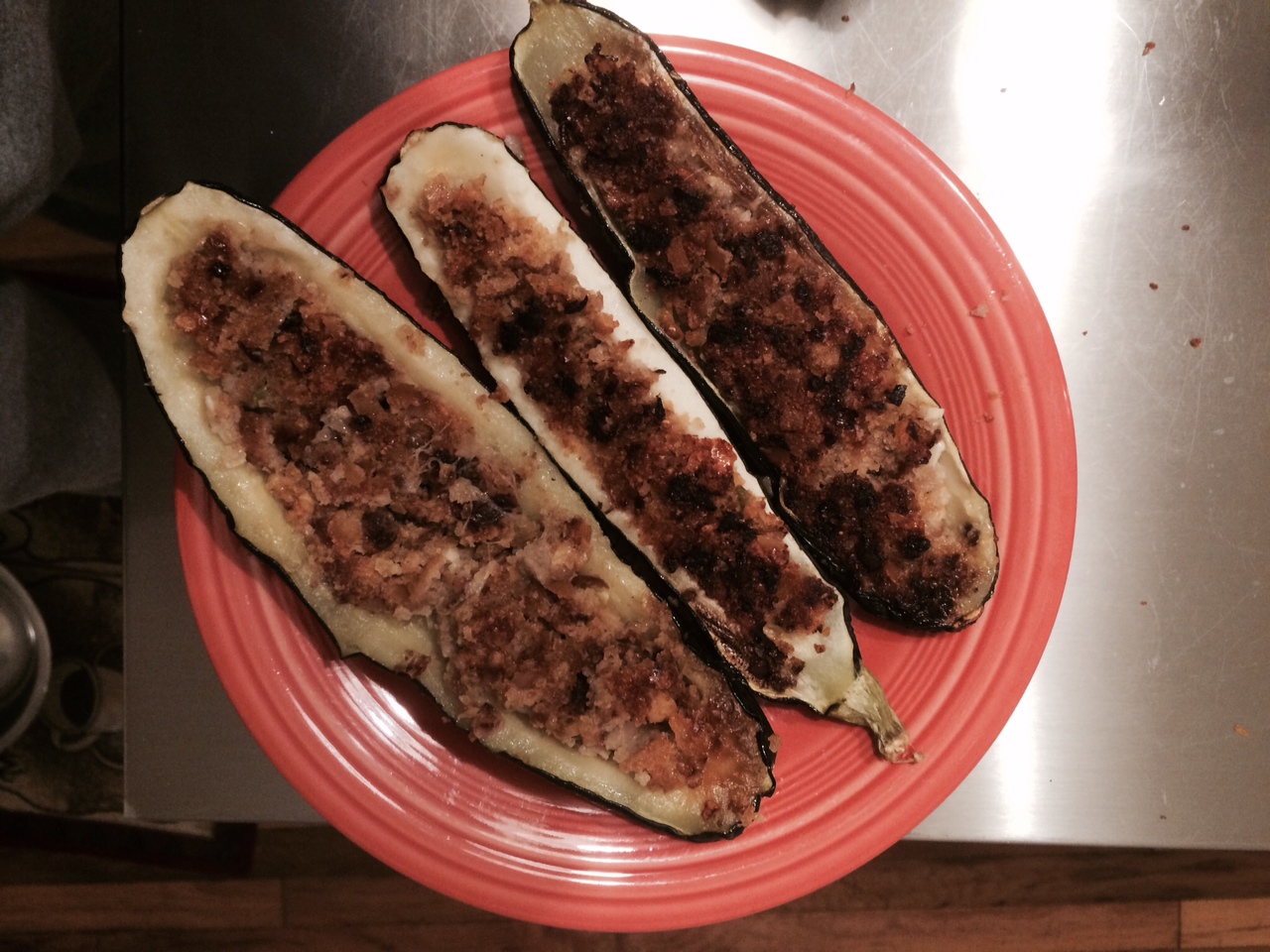
The second picture above is of stuffed and cooked ‘Vegetable Marrow’ from my garden.  The English prepare the dish by stuffing the fruits with bread crumbs, onions, nuts and sometimes sausage.  I must say it was absolutely delicious, with a very mild flavor and soft texture.  I plan to grow it every year: it is a fairly small, bushy plant, produces early and heavily and tolerates cool as well as warm weather.  The first fruits should mature in about 55 days.  The plants in my garden grew to about three feet in all directions.

The third picture above is of ‘Boston Marrow’.  It is a member of the Cucurbita maxima species, which originated in the Andes.  This species also includes buttercup, Hubbard and banana squashes, among others.  A nineteenth century seed catalog from D.M. Ferry lists ‘Boston Marrow’ and gives a good description, “Of oval form; skin thin; when ripe, bright orange, flesh rich salmon yellow, very dry, fine-grained and for sweetness and excellence, unsurpassed; a very popular variety in the Boston Market.”  Peter Henderson (1865) considered it as a “second early” squash, after ‘Yellow and White Scalloped’ and ‘Summer Crook Neck’.  This variety was the first squash to ripen in my garden; the plant grew very fast and eventually reached about eight feet in width and length and about four feet in height.  The plant likes full sun if possible and good air circulation.  The squash fruits are keeping well, but I have not cooked any yet.

If you are saving seed from squashes, remember that the four species of squash will cross with one another , except that C. maxima does not cross with C. mixta or C. pepo.  This means that to keep an heirloom or any open-pollinated variety true each kind must be isolated (grown separately) by 1 1/2 to 2 miles, unless you have plantings of one variety each of C. mixta and C. pepo, which cannot cross-pollinate.