MARCH GARDENING CALENDAR

Standard

fullsizerender-19

MARCH GARDENING CALENDAR

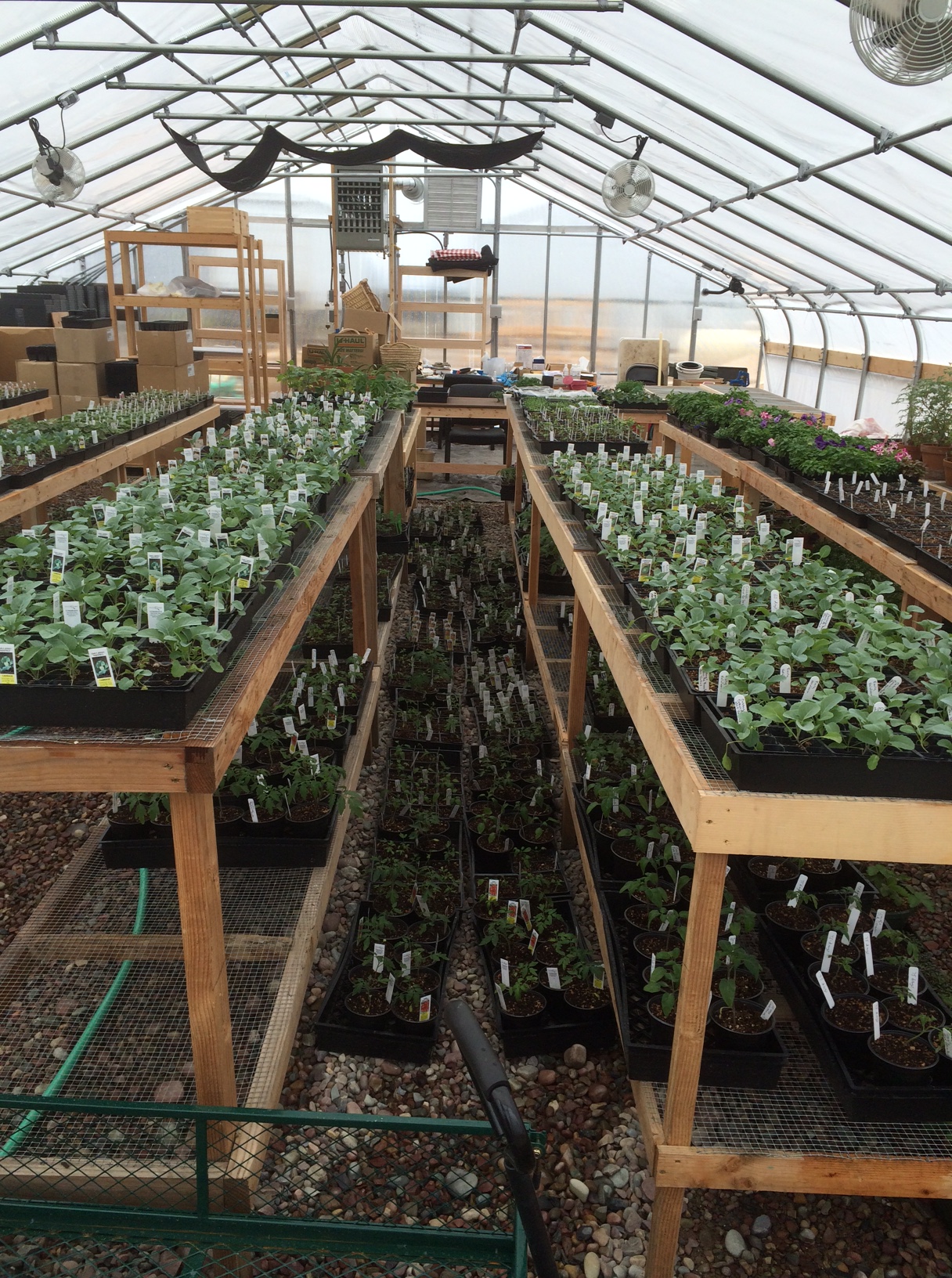
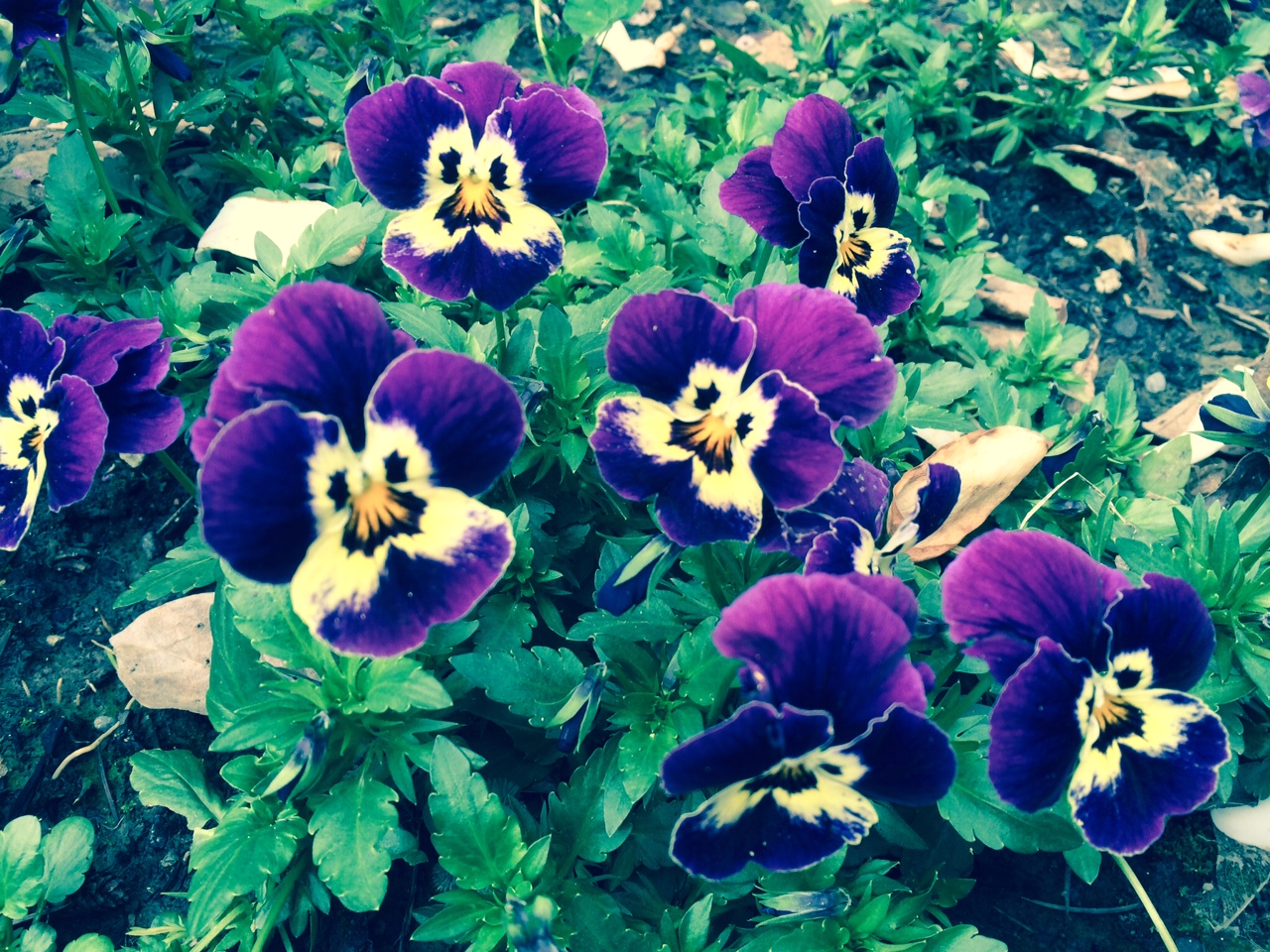
March is a very busy month for Montana gardeners!  A brief summary of things we can do now is: plant lettuce and spinach in cold frames; plant/prune cane fruits, fruit trees, deciduous trees; plant evergreens as soon as ground thaws; plant rhubarb, strawberries, asparagus, sea kale, and artichokes; weed and clean borders, plant perennials, sow seeds of hardy annuals and biennials outside; sow seeds of tender annuals and vegetables inside.  Clean pansy beds and manure them; cover cold frames at night and admit air during the day. 

VEGETABLES

Late in the month, begin to harden off cool loving vegetables (from a January sowing) in frames.  Sow indoors: broccoli, cabbage, cauliflower, kale, kohlrabi, head lettuce, artichokes, Brussels sprouts, Asian cabbage, greens, peppers (finish peppers early in the month).  Start tomatoes also.  Late in the month direct-sow outdoors: asparagus, beets, arugula, carrots, celery, chervil, chives, cilantro, dill, fennel, collards, mache, fava beans, cress, kale, kohlrabi, leeks, lettuce, mustard greens, rhubarb, turnip greens, onions, parsley, peas, radishes, scallions, spinach and Swiss chard.  As soon as weather permits plant: asparagus roots, broccoli, cabbage, cauliflower, garlic, shallots, lettuce, onion sets and plants, horseradish, strawberries and Jerusalem artichokes.  Finish sowing herb seeds this month.

FLOWERS

Begin dividing perennials as soon as the ground is thawed.  Direct sow outdoors: annual alyssum, pinks, sweet Williams, stocks, rose campion, wall flowers, lychnis, lupines, lavateras, columbines, valerian, polyanthus, auriculas, Canterbury bells, cynoglossum, hollyhocks, honeysuckles, rockets, honesty, fox gloves, snapdragons, sweet peas, poppies, larkspur, cornflowers, nigella, lavatera, valerian, poppies, kiss-me-by-the-garden-gate and dill.

FRUIT

Fertilize (spread organics), plant and prune fruit trees, blackberries, raspberries, grapes, currants, blueberries.  Clean strawberry beds and make new beds.  Fertilize (spread organics) on strawberries and asparagus.  Clean up after pruning fruit trees; remove dead wood, dropped fruit, and inspect trunks for egg masses.   Spray Bordeaux mix on fruit trees that suffer from fire blight after carefully pruning out affected wood.  (Cut 6 inches below signs of infection, sterilizing pruning tools between cuts with alcohol, or a 10% bleach solution.)  Spray superior oil on dormant trees (before leaf out).  Wait three weeks after dormant spray if you decide to spray lime-sulfur (use caution) as a fungicide on roses, lilacs, dormant shrubs, fruit trees, evergreens. 

TREES, SHRUBS AND ROSES

Plant evergreens, roses and other shrubs during March.  This month is the very best time of the year to move or plant evergreens.  Wait until April to prune roses as canes often die back from late frosts if cut too early.  Dress with your roses Epsom salts now, and apply wood ashes, compost, manure, alfalfa meal, bone meal, kelp meal, and other organic amendments to rose, perennial, fruit and vegetable garden beds. 

A NOTE ON SEED

Now is a great time to test the germination on your stored vegetable seeds.  To establish a percentage of germination for your seed, place 10 seeds in a moist paper towel, lay it on a plate; with a loose cover of plastic wrap, or a glass or plastic dome.  Put the plate in a warm location and wait a few days.  The number of seeds that germinate will give you a rough idea of the percentage of live seed you have.  This kind of test is a good way to see if your old purchased seed, or seed that you have saved yourself, will grow. 

Now is also a prudent time to plan which varieties of vegetables you might want to save seed from for next year.  Once selected and growing, plan to save seed from your best plants.  Choose plants mid-season in their fruiting and mark them with tags or labels, as ones to save seed from.  Pick the fruits when past eating ripeness; clean the seed carefully.  Dry it well before storing in clean, dry glass jars with metal lids.  Label the jars carefully with variety name and year of harvest.  Store your seeds in a cool, dark, dry place so they have the best chance of staying alive.  Seed-saving techniques vary from species to species, so it is good to obtain as much information as you can before you try.  A great book is Saving Seeds by Montana authors Robert Gough and Cheryl Moore-Gough; another is The Heirloom Gardener by Carolyn Jabs.  An excellent book about seed starting, saving and plant propagation is: The Royal Horticultural Society Propagating Plants, Edited by Alan Toogood.  These three books may not be the newest, but their information is detailed and practical, especially the latter book.  An online article with basic information about seed-saving, including lots of pictures, can be found at: https://robinsonloveplants.com/saving-seeds/

DECEMBER GARDENING CALENDAR

Standard

img_4202


Shown in the photograph above is North Crow Creek Canyon in the Mission Mountains of Western Montana.  I have a beautiful view of the canyon from my front yard.  Snow is piling up now that winter is here.  December is probably the least busy month for gardening of the year in colder climates like ours.  Here are a few things we might need to do.

Check stored vegetables and fruit often; inventory seeds and test germination of last year’s seed.  Plan your 2017 garden and order seed.  Keep perennials and bulbs planted next to the house covered with snow to insulate them from extreme cold.  Make sure all young fruit trees have their trunks wrapped and place wire netting around trunks to prevent damage from rabbits and voles.   Mulch hardy tree seedlings and bulb beds with pine or fir branches.

Save wood ashes all winter long to spread on beds in spring on plants that enjoy alkaline soil conditions.

VEGETABLES

Admit air to cold frames and cover frames at night.  Uncover on mild days, but do not let sun shine on frozen plants.  Pick off any decaying leaves.  Cover frames every night with mats, blankets, straw, ferns or insulating row fabric.  Late cabbages, kale and greens should be under hoops covered with row cover fabric.

Check stored vegetables often: potatoes, onions, carrots, and cabbage, etc.  Also check stored flowers and fruit: dahlias, glads, cannas, apples, pears.  Cabbage likes high humidity (80-90%) and a storage temperature of about 35 degrees.  Potatoes, glads and dahlias prefer about 45 degrees and high humidity.  Onions and garlic need air, with about 60% humidity, so hang and keep them dry, storing at about 35 degrees.  Apples need about 30-35 degrees with high humidity.

Force asparagus in hot beds.

FLOWERS

If there is no snow, cover perennials and roses with evergreen branches to protect them.  Spread thin, flaky manure over pansies, carnations, pinks, tulips, penstemons and phloxes.  Spread composted manure over the vegetable garden.  Over the winter the manure will break down and feed the soil.  Any pathogens will be gone by the time you begin planting vegetables in mid-March.

For house plants: start amaryllis, watering lightly at first with warm water.  Keep in a warm place and gradually increase watering as the stems elongate, but do not keep the plants wet.  Moist soil is best.  Watch for spider mites on houseplants, mini roses and amaryllis.  If you see them, wash the whole plant first with plain water; then spray with insecticidal soap or garlic/herb spray every 3 days for 2 weeks.  Another method to control spider mites is to spray foliage every day with water.  Spider mites do not like frequently  wet foliage.  Do not over water houseplants this time of year, especially geraniums, which are nearly or totally dormant now.

Late in the month, after the 20th, start seeds of begonias, geraniums, primroses, Dahlias, pansies, and lisianthus.

For potted auricula primroses and other hardy plants in cold frames, keep admitting air into the frames when it is warm enough and keep frame covers handy if the weather gets very cold.  Cover outdoor primulas with light straw.

FRUIT

Check stored fruit often for spoilage and discard any rotting fruits.

TREES, SHRUBS AND ROSES

Take cuttings of lavender, pyracantha, sumac, spirea, mock orange, wiegela, wisteria, and robinia.  Place cuttings in a mixture of ½ peat and ½ perlite.  Insert small stakes into the pot to act as supports.   Place plastic bags over the tops of the pots and sink them into sand or soil inside a cold frame situated out of direct sun or in shade .  The cuttings should root over the winter.

NOVEMBER GARDENING CALENDAR

Standard

fullsizerender-8

NOVEMBER GARDENING CALENDAR

GENERAL

Early in the month, prepare beds for next spring’s early crops; add manure and trench into furrows to receive frost (this will break down and lighten/feed the soil).

Check over which varieties of flowers and vegetables you liked or disliked, which ones did well, and make a note of it.  Keep records up to date.  Check stores of fruits and vegetables and discard spoiling ones.  Clean all your tools, oil wooden handles and replace cracked ones.  Drain gas and oil out of lawnmower for winter.

VEGETABLES

Finish planting garlic, shallots, and Egyptian walking onions.

Have row covers ready for remaining crops in the field; also have covers ready for cold frames.    Carefully store row covers before winter; make sure the fabric is dry before folding and storing.

Early in the month, if not done earlier, harvest and store cabbages.  To store them, turn them upside down to dry, take off extra leaves and place them in a trench of sand and cover with a wet-proof cover open at both ends to keep them dry.  Close the ends of your cover with straw when frosty.  Also, to store beets, carrots, parsnips, turnips, salsify for winter: dry and cut tops off.  Dig a pit in a dry place if possible.  Put down 2 inches of sand, then roots, then more sand, alternating.  Then cover with sand again and straw to protect them.

Admit air to cold frames and greenhouse on sunny days; pick off any mildewed or moldy leaves.  Force asparagus in hotbeds.  Manure outdoor asparagus and rhubarb to 4 inches deep.  Weed onions, leeks, spinach, mache, cresses.  In frames: when it is cold, cover lettuces, cabbages, etc.  Harvest late and frame–grown cabbage, spinach, carrots, peas, cauliflower, lettuce, broccoli, Brussels sprouts.

FLOWERS

Finish dividing and replanting perennials before winter freeze-up.  Transplant seedling perennials and flowers into flats; keep them in a cold frame or cold greenhouse.  Mulch primroses, bleeding hearts, and any marginally hardy perennials with pine or fir branches.  Pot up double daisies; keep in frames.  Move potted flowers to frames to protect them from heavy rains.  Take and root cuttings of Pulsatilla.

Cut back established pansies, collect violet seed, continue to ventilate frames.  Prepare pansy and violet beds for planting.

Finish planting bulbs out and plant bulbs to be forced in pots.  Weed bulb beds and spread bone meal if not done last month.  Put poultry netting over newly planted tulips, crocus and hyacinths to discourage squirrels.

In the greenhouse admit air; the plants will be at rest.  Keep foliage dry, do not over water or not at all!  If mold appears, dust with sulfur.  Plunge pots of border auriculas, primroses and carnations up to the rims into gravel or soil in a frame.  Be sure to give air.  Cover frames if frosty and cold, letting no sun shine on them when frozen.  If you have bulbs, perennials, roses or shrubs growing in pots outside, be sure to sink them up to the rims into soil, sawdust or gravel to protect them from cold over winter.

FRUIT

Weed fruiting shrubs, add manure to raspberry beds.  Finish storing apples, pears, etc.  Clean all leaves and mummy fruit around trees to prevent disease and discourage insects.  Sow seeds of fruit trees and rootstocks.  Make hardwood cuttings of Prunus and Vitis cultivars.

TREES, SHRUBS AND ROSES

Finish planting deciduous shrubs and trees.  Layer clematis, divide Mahonias; take cuttings of lavender, Forsythia, Rubus and lilacs.

OCTOBER GARDENING CALENDAR

Standard

fullsizerender-6

OUR PHOTOGRAPH SHOWS A BLOOM OF ‘DART’S DASH’

A RUGOSA ROSE FROM THE 1930s

GENERAL

Bring in any remaining vegetables to ripen, or cover them with a row cover designed to take frosts into the mid-20s.  Plant bulbs, wildflower mixes and hardy annuals.  Harvest apples and pears, and sow seeds of hardy trees and shrubs.

VEGETABLES

Have row covers ready for tender plants that might succumb to fall frosts.  Crops can still be harvested in cold frames and under row covers into November.  Ventilate plants in frames and give air and water freely.  When it is cold, cover with mats or straw and do not let the sun shine on an open frame full of frozen plants.

Finish digging potatoes early in the month in case we get a heavy frost.

Harvest Brussels sprouts, cauliflower, cabbage, carrots, lettuce, spinach and herbs.  Harvest and store cabbages late in the month: Turn them upside down to dry, take off extra leaves and place them in a trench of sand and cover with a wet-proof cover open at both ends to keep them dry.  Close the ends with straw when frosty.  Thin spinach and lettuce planted last month.  If you have protected your pepper plants from frosts and heavy frost is on the way, pull up the plants and hang them upside down to ripen fruits.  Harvest ripe squash and pumpkins, leaving a one to one and a half inch stem.  Dig, divide and transplant garlic and shallots.  Hang onions to dry in an airy cool place.  Cut asparagus and perennial herbs back before winter.  Carrots may be left in the ground and covered with two feet of straw, leaves or peat moss to pick as needed most of the winter.

FLOWERS

Plant bulbs this month, finishing by November 1; give a top dressing of bone meal to the previous season’s bulbs beds.  Divide and replant peonies and plant wildflower seed.

Divide perennials late in the month, after cool weather begins, into November.  Sow seeds of late-blooming perennials (to sprout in spring).  Trim lavenders and other shrubby herbs to a few inches and give them a light dressing of manure.

If not already done, dig tuberoses, dahlias, amaryllis, glads and other tender bulbs.  Spread them out to dry in a warm room, clean off hair roots and decaying foliage and pack them up in dry boxes of sawdust.  Keep your bulbs in a cool, dark, dry, frost-free location.  Weed established bulb beds and spread bone meal as a top dressing.


FRUIT

Harvest apples and pears for storage when the trees are dry.   To test for ripeness gently twist fruit gently one way or the other.  If it comes off easily it is ready to pick.  Place harvested fruit in heaps in a shed to dry further for 10 to 14 days.  Examine each fruit for bruises, which will cause rot in storage.  Wipe each one dry, wrap in paper and store in barrels; or, wipe dry and place in dry sand in the barrels.  Keep in a cool, dry cellar away from frost.

TREES, SHRUBS AND ROSES

Transplant trees, shrubs and fruit trees late in month.

Watch for leafhoppers on roses and spray before severe frosts occur to get last generation before winter.  To protect tender roses over the winter in cold areas, mound each plant with soil about 6 inches deep and place a layer of evergreen branches over that.  In the spring the soil can be removed gradually, about an inch at a time.  In the spring, uncover the plants gradually.  Use a gentle jet of water from a hose once a week or so, finishing about May 20.   If a heavy late frost threatens, place the evergreens over the crown of the plant again, removing them when weather warms.


FALL IS FOR PLANTING TREES, SHRUBS, ROSES AND WILDFLOWER SEED!


SOIL PH FOR GROWING VEGETABLES

Standard

FullSizeRender


Soil pH is a measure of acidity or alkalinity.  This measurement can range from a very low pH of 1.0 to an extremely high pH of 14.0.  7.0 is considered neutral and several vegetables will thrive in soil with a neutral pH.  Some vegetables do prefer a more acidic soil while others prefer a more alkaline soil.  Fortunately most will grow and produce well in a pH range of 5.5 to 7.5.   Areas with high rainfall, such as coastal Washington, tend to have acidic soils high in organic matter, while areas with lower rainfall, such as most of the mountain valleys in Montana, tend to have alkaline soils low in organic matter.  Here in the valleys of the Flathead region, where most of us garden, soils tend to be somewhat to highly alkaline.

Before you amend your existing soil to plant vegetables it is a good idea to test the pH.  An easy way is to purchase a test kit.  Most of them are easy to use and give fairly accurate readings.  Your county extension agent can do a soil test also.  Once you have determined your soil pH and which crops you intend to grow, you can amend your garden soil.  Adding lime will increase pH and make acidic soils more alkaline; adding sulfur will lower pH and make soils more acidic.  Organic matter usually helps reduce alkalinity.  Aged manure, pine needles, compost and coir dust are a few amendments that will help do this while they improve soil structure and encourage beneficial soil micro-organisms.  If your garden is divided into separate beds or raised beds, it is easier to adjust the soil in each bed for what you plan to grow.   I rotate my vegetable crops in a four-year rotation plan, so I try to keep a basic soil pH around 6.0 to 6.5.  This way I can grow almost every vegetable, but I slightly adjust pH each year before growing a particular plant.  For example, I add sulfur before growing potatoes.  Conversely, I add a small amount of lime before planting any of the Brassica family (Broccoli, Brussels sprouts, cauliflower, etc.).   Having soil pH correct for each crop will reduce pest and disease problems as well as increase yields.

Here is a listing of pH tolerance ranges for specific vegetables.  (The optimum pH for each is usually the median between the two extremes.)  I have listed vegetables preferring more acidic soils first and those preferring more alkaline soils last:

Potatoes, 4.5-6.0; sweet potatoes, 5.6-6.5; horseradish and rhubarb, 5.5-6.8; butternut squash, carrots, corn, eggplant, lettuce, peanuts, peppers, pumpkins and watermelon, 5.5-7.0; cucumbers, garlic, winter squash, and tomatoes, 5.5-7.5;  celery, 5.9-6.9; soybeans and strawberries, 6.0-6.8; onions, radishes, shallots and spinach, 6.0-7.0; beets, any of the Brassica family, peas, summer squash, Swiss chard, and zucchini, 6.0-7.5; okra, 6.0-8.0.


GROWING VEGETABLES IN CONTAINERS

Standard

IMG_0677 IMG_0678

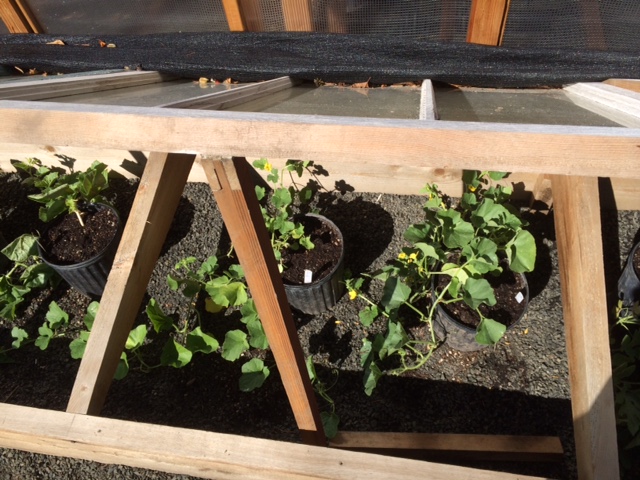
My pictures show heirloom French cantaloupe ‘Prescott Fond Blanc’ and ‘Ananas D’Amerique a Chair Vert’.  The containers were too small to mature the fruit, so I repotted them into much larger 24″ by 24″ pots.  The frame helped ripen the fruit in the climate of cool western Oregon. 

Raising vegetables in containers is an excellent option for those of us who are living in a dwelling temporarily, are short of space, or have poor soil.  Containers are useful and versatile; pots can be moved around if a location is too hot, windy or shady.  Plants that enjoy heat, such as melons, squash, peppers, tomatoes and eggplant can be placed in front of a warm south or west wall to ripen faster.  Also, if spring cold weather threatens, pots may be moved inside overnight, or even a few days for protection.  The same advantage applies to the fall season; if weather turns cold and your crop is not yet ripe you can bring pots inside.    

Containers for vegetables should be at least 12 inches by 12 inches for a single tomato or eggplant, but much larger containers are needed for melons, squash and pumpkins—at least 24 inches by 24 inches for each plant.  Smaller crops, such as carrots, beets, broccoli, cabbage, Swiss chard, spinach, lettuce, etc. need a container at least 10 inches deep, and yields are better if the pots are 24 to 36 inches wide.  For peas and beans, some gardeners have good success with containers shaped like long rectangles, perhaps 12 inches wide by 48 inches long and 10 or more inches deep.   It is easier to move your containers around if you have them on rollers.  And if you build your own containers, use non-treated water-resistant wood such as cedar, redwood or cypress.  The new fabric containers are useful, reusable and inexpensive, but cannot be moved during the season. 

The soil mix for vegetables should be rich, moisture-retentive, but quick draining.  Plant roots need air to thrive.  I use a mix of two parts organic potting soil, one part rotted manure or compost, and one part perlite or sharp sand.  Consistent, frequent applications of manure tea, liquid seaweed or a complete organic fertilizer will keep your vegetables growing well. 

Watering is very important when growing in containers.  Check plants every day all season long.  If weather is hot and the plants are large, you might have to water two or three times a day.  Automatic drip watering systems are an option if you will be away for a few days. 

When planting seeds, follow directions on the package and read about how to care for each vegetable.  “Patio”, “bush” or dwarf varieties of vegetables are good choices for containers.  They tend to be compact, productive plants with normal size or slightly smaller fruit.  Vegetable seeds that can be planted now (July) include: lettuce, spinach, peas, radishes, carrots, corn salad, and Swiss chard.  Plant starts of cabbage, cauliflower, broccoli and kale can be planted now for late fall harvest.  Starts of tender vegetables that can be planted in containers now include: tomatoes, squash, pumpkins, cantaloupe, watermelon, eggplant and peppers.

Moving the Heirloom Garden to Montana

Standard

FullSizeRender (2) IMG_2404 IMG_2433 IMG_2545 (1)

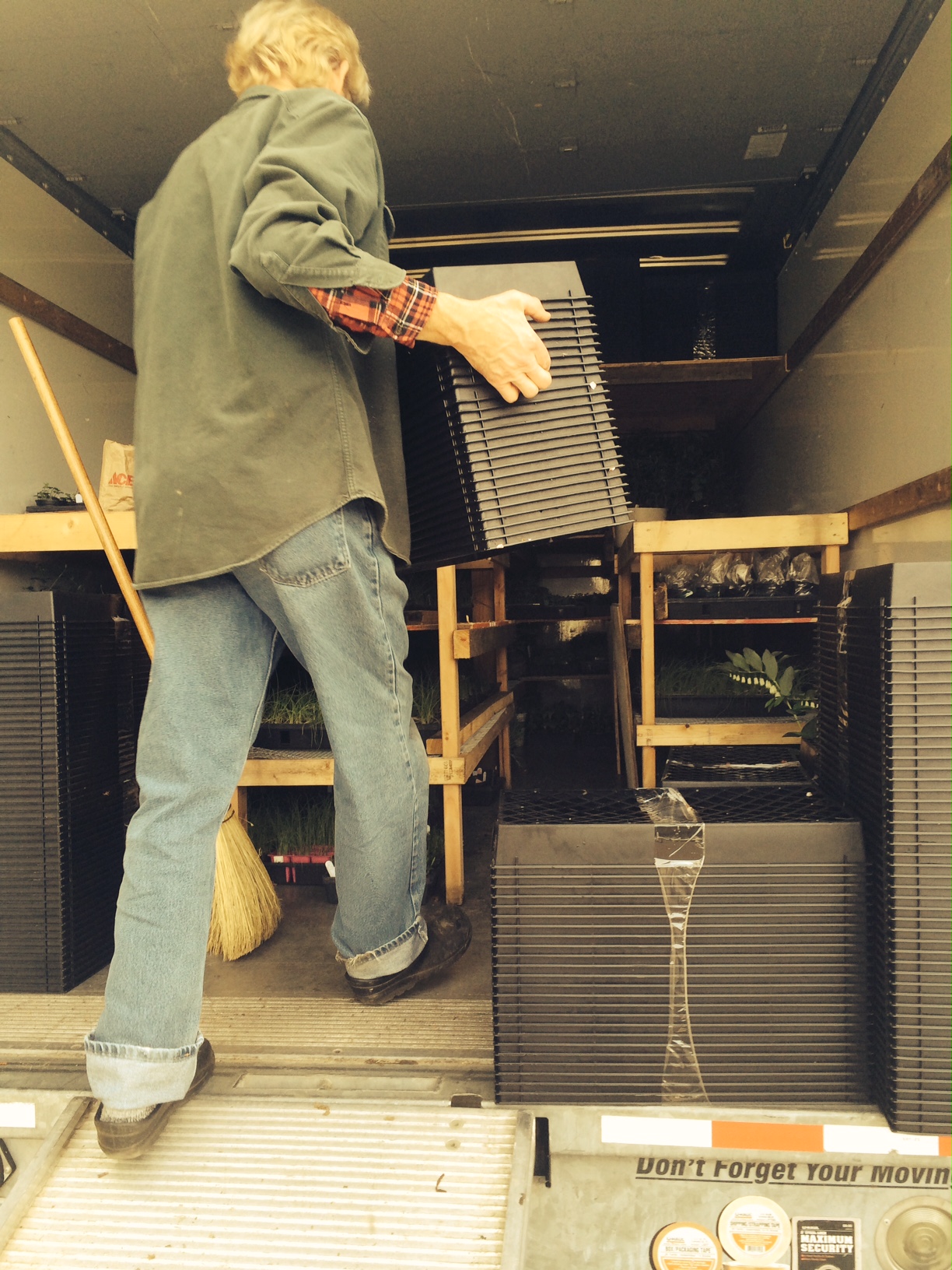
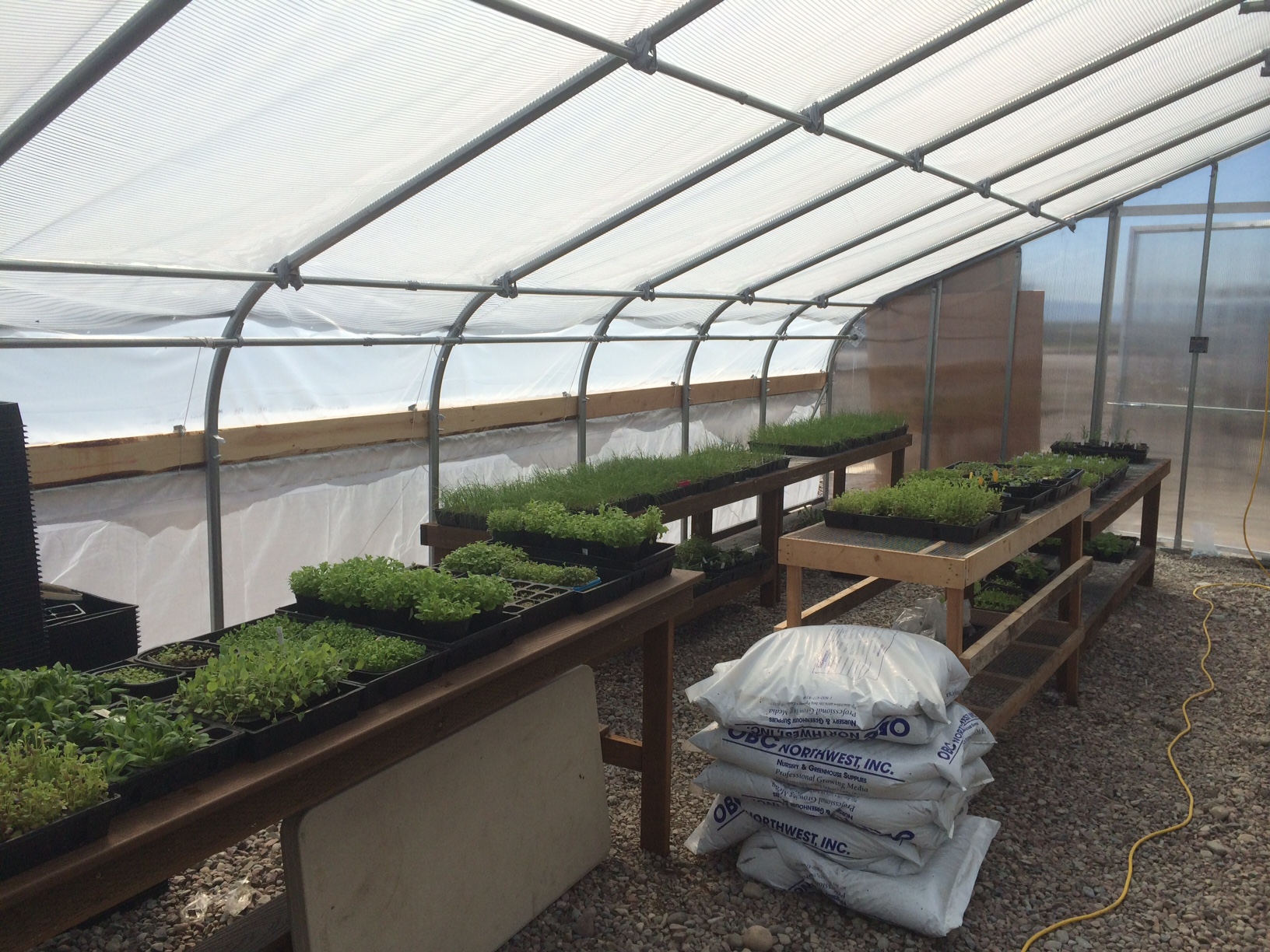
Hello everyone!  I have been moving our garden of heirloom plants to Ronan, Montana, where I will be joining the staff at Westland Seed, Inc. as greenhouse/nursery manager.  The pictures above show our progress.

We will have our grand opening May 20th and 21st!  All our plants are grown using OMRI certified soils, fertilizers and management techniques.  We feature heirloom plants from the pioneers in America, old varieties from Europe, Asia, the Pacific Isles; things from all over the world. of special interest are more than 30 varieties of Native American vegetables and flowers.

Our soil mix is made from a certified organic composted buffalo manure, with other certified organic ingredients added.  (see our previous posts on soil mixes for ideas.)   The potting mix we amend for our bedding plants and vegetables is produced by Buffaloam Company; made from the manure of grass-fed bison, composted for three years.  It is an odorless, friable medium we like.  This primary ingredient is especially appreciated here on the Flathead Indian reservation as it reflects our ancient Native American heritage.

In future posts, I will describe some of our featured heirloom vegetables and flowers.  Almost all of our greenhouse and nursery plants are heirloom, open-pollinated varieties.  We also offer native and medicinal plants  We do NOT offer any GMO plants or seed in our greenhouse nursery.

I will be posting this blog on the Westland Seed website, on the Greenhouse Page, along with future instructional and informational videos, plus an event calendar.  The Westland Seed website is http://www.westlandseed.com

April Gardening Calendar

Standard

photo (133)

April is another busy month for gardeners; usually a month characterized by ups and downs in temperature.  Keep watch for frosts; protect cold frames with mats if frosts are imminent, and admit air daily as weather permits.  Finish pruning fruit trees if not done, plant grapes; fertilize and prune blackberries.  Check your fruit trees and roses for pests as soon as they bud and leaf out and set out apple pest traps two weeks before bud break.  Weed and amend all your beds now while it is cool and moist.

Finish planting fruit trees, shrubs, roses, and perennials.  This month is a good time to direct sow (where they are to flower)seeds of several flowers: sweet alyssum, cornflowers, carnations, pinks, poppies, stocks, rose campion, Lychnis, columbines, valerian, honesty, foxglove, snapdragons, mignonette, larkspur, kiss-me-by-the-garden-gate and four-o’clocks.  Perennials still may be divided if weather has not become too warm.  Violets can be divided after blooming and cuttings taken of pansies.  Make cuttings of chrysanthemums, gauras, Helianthus, lupines, Lychnis, Liatris, knautias, saponarias, scutellarias and veronicas.  Dahlias and tigridias may be started inside in cold climates and planted out later after frosts are over, or planted outside if the soil temperature is above 60 degrees F.

Several vegetables can be direct sown if weather permits and it is not too cold: beets, arugula, carrots, caraway, celery, chervil, chives, cilantro, dill, fennel, collards, mache, fava beans, cress, kale, Jerusalem artichokes, kohlrabi, leeks, lettuce, mustard greens, rhubarb, turnip greens, onions, pasley, parsnips, peas, potatoes, radishes, salsify, scallions, spinach and Swiss chard.  Sunflowers and tomatillos can be sown two weeks before the last expected frost.

Corn may be sown after April 15th in cool maritime northwest climates, or a week or two later in the inland and mountain areas.  Usually corn is sown about 10 days to two weeks before the last frost.  Native Americans of the Hidatsa tribe living in the Dakotas planted sunflowers first, then corn, and after frosts followed with beans and finally, squash.  Sunflowers were grown by themselves in a field, but corn, beans and squash were grown together; with corn in hills of 6-8 and beans and squash vining through.

Vegetables started last month indoors may be planted out this month: the brassicas, parsley, Asian greens, rhubarb and tomatoes; once frosts are over.

Prune established roses before bud break and seal the cuts with water-based glue or wood glue.  This prevents drilling wasps from injuring the canes.  Fertilize organically with Epsom salts, manure or compost, bone meal or rock phosphate, alfalfa meal and seaweed or wood ashes.

A few things maybe grafted now: grapes, hollies, pears, maples, pines and clematis.  Layers can be made of Cotoneaster, Cotinus, Hydrangea, Lavandula, Lonicera and Parthenocissus. 

Enjoy spring!

Growing Asparagus

Standard

photo (119)

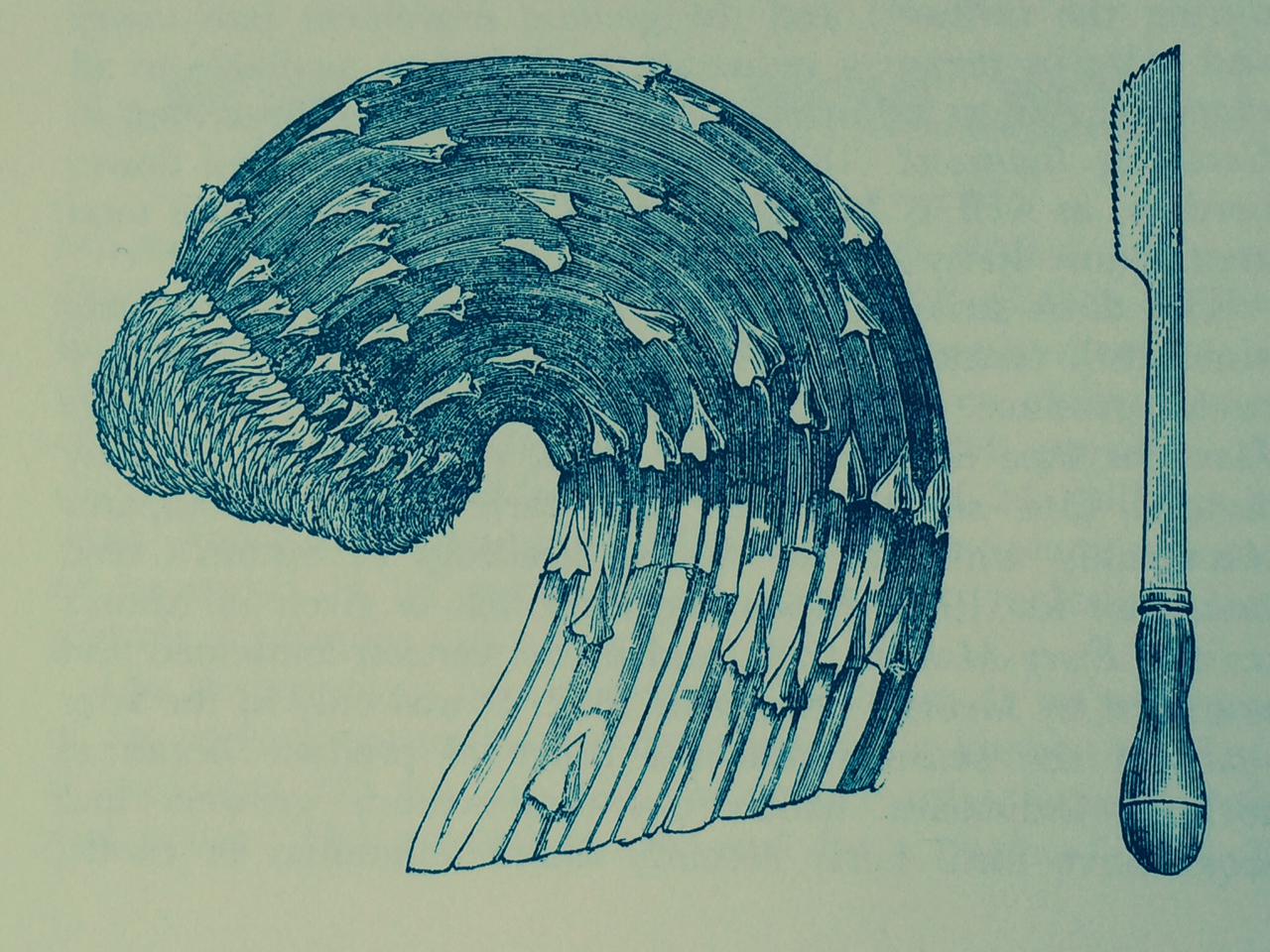
Asparagus (Asparagus officionalis) is a popular vegetable today and was quite popular in the nineteenth century.  The photograph above is of an antique variety, ‘Giant Asparagus’ an engraving from The Illustrated London News, dated 1851.  An asparagus knife is shown alongside the plant.  This year, I grew another old variety of asparagus from seed, ‘Connover’s Collosal’, dating to the second half of the nineteenth century.   It is difficult to find plants of heirloom varieties of asparagus, so one has to start them from seed.  However, the process is slow, as the plants take three to four years to reach the size for harvesting.  (If too many shoots are cut from very young plants, productivity may be reduced, or the plants may die.  But if the plants are allowed to become established, an asparagus bed will last twenty years or more, even up to fifty years!)

Late March into early April is an excellent time to start asparagus from seed.  Use a sterile medium, cover the seed about 1/4 inch deep and place the pots in a warm location (77 degrees is optimum).  The seeds should come up in about ten days.  You may direct seed into a bed if soil temperatures are above 50 degrees, it will just take a little longer for the seeds to germinate.  Asparagus plants begin to grow slowly and will not be ready to transplant out for about three or four months.  Meanwhile you can prepare a bed for them.  An ideal spot is in full sun with a bed large enough to accommodate the number of plants you need.  It is usually recommended to plant five to six plants per person.  Since the plants are perennial (USDA climate zones 4-9) they benefit from a well-prepared bed.  Peter Henderson, in his book Gardening for Profit published in 1867, recommended planting transplants nine inches apart in rows three feet wide for commercial growers, or two feet wide for home gardeners.

Once you have established how many plants you need, you can make the planting bed.  Henderson recommended trenching the bed two to three feet deep with about three inches of rotted manure mixed into the soil.  A deep sandy loam is best for them as they are native to alluvial soils.  Bernard Mc Mahon, in Mc Mahon’s American Gardener, published in 1857, recommended double digging two spades deep and placing several inches of rotted manure in the trench, then spreading another layer of rotted manure over the surface.  He directed gardeners to mix this second layer of manure with the soil to a depth of eight to ten inches.  My young plants, now a year old, have spears a little larger in diameter than a toothpick.  The young plants may be grown in a temporary (sunny) rich bed for another year, then moved to their permanent location.  Place the crowns of the plants two inches below the soil surface.  Keep the beds weeded to ensure quick, even growth.  Mc Mahon recommends three years from planting (which would be four years from sowing seed) before cutting can begin.  Dress the bed every spring with rotted manure, bone meal and wood ashes.

If your family really enjoys asparagus, plant more than five plants per person; I plant twelve per person.  If you plant two-year transplants, spread the roots out like the spokes of a wheel and cover with about one inch of prepared soil.  Water well.  As the plants grow, cover them with more soil until you have them two inches under.  Do not use fresh manure as it will burn them and (heaven forbid) do not use chemical fertilizers, especially on newly planted asparagus.  Wait two years to begin cutting.  A summer mulch of three inches of straw is excellent, will protect the plants in winter and the spears will come up earlier in the spring if the ground is not frozen too deeply.

When you cut asparagus spears get them into the refrigerator right away or cook them immediately because they lose flavor as quickly as sweet corn does.   Considering how expensive asparagus is, I find the start up work well worth while.  Enjoy!

March Gardening Calendar

Standard

photo (118)

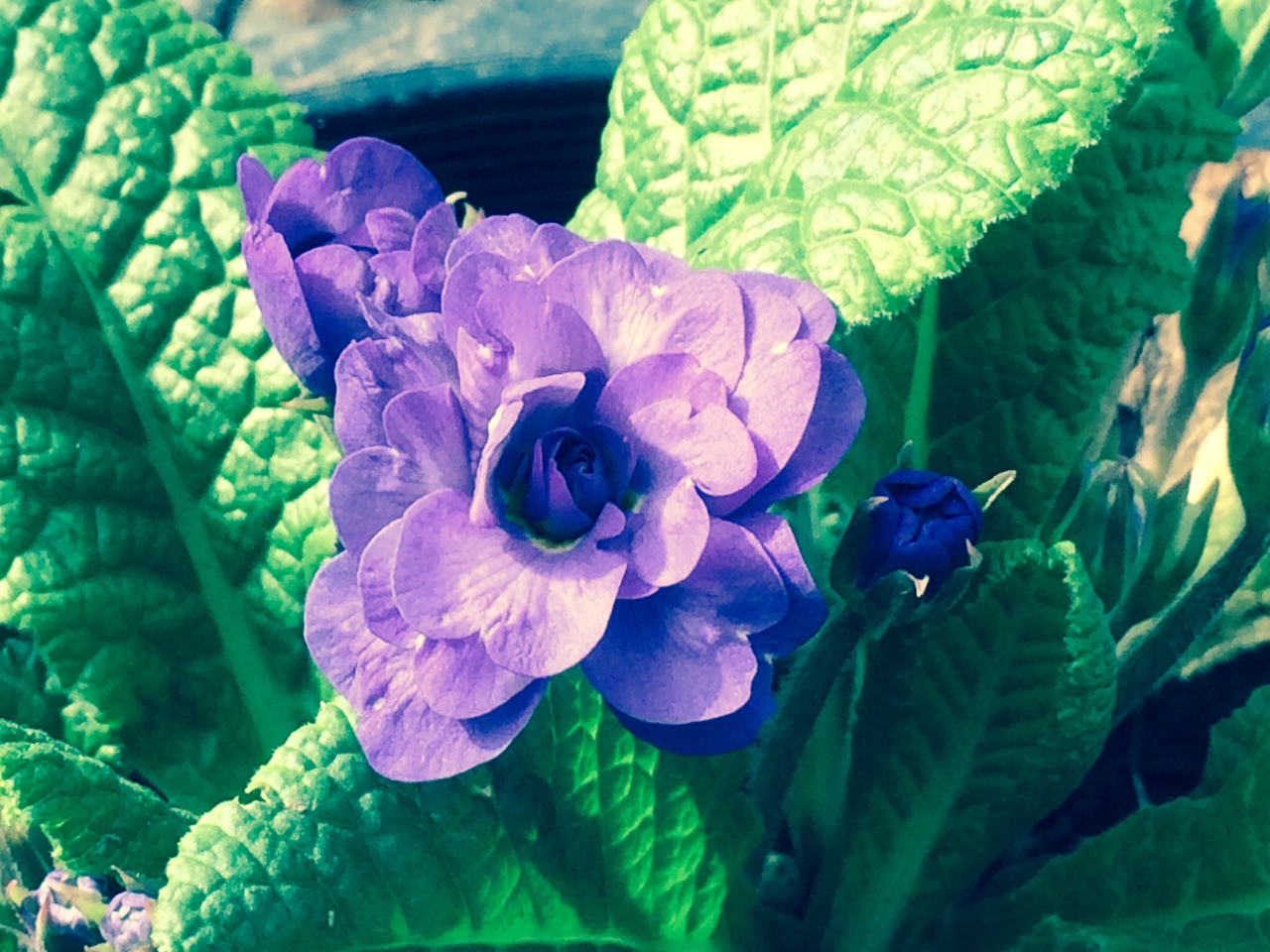
This photo is of a double blue primrose seedling, blooming now in Corvallis, Oregon.

March is a very busy month for gardeners.  Root crops stored from the previous year and planned to produce seed can be planted out late in the month after the soil thaws (cabbages, celery, lettuce, leeks, onions, parsnips).  Planting time will arrive soon, or has already arrived for those of you in mild climates.  Weed and clean borders and vegetable beds, plant perennials, sow seeds of hardy annuals, plant rhubarb, asparagus, sea kale and artichokes.   Plant and/or prune cane fruits and fruit trees (cherries, apples, peaches, apricots, pears, plums, currants, gooseberries, etc.).  Check cold frames on a regular basis, venting as needed and closing the glazing panels at night.  Watch temperatures in the greenhouse also, as March is a month of ups and downs in temperature.  Manure and other organic soil amendments (epsom salts, seaweed meal, alfalfa meal, greensand, bone meal, compost and wood ashes) can be spread over vegetable, fruit, flower and rose beds.  Grape vines can be manured now, leaving space around the stem; treat roses in the same manner.

Many vegetables can be sown indoors now for transplanting out later: cole crops (brassicas), onions, lettuce, peppers, eggplant and leeks.  Some vegetables can be direct sown outside if weather permits and if your soil is not too wet to work: arugula, carrots, corn salad, fava beans, cress, mustard and turnip greens, onions, peas, radishes and spinach.  Celery and lettuce can be direct sown into frames.  Several vegetables and fruits can be transplanted now: raspberries, blackberries, strawberries, asparagus, horseradish, head lettuce, onion sets and plants and perennial herbs.  Make sure your mushroom beds do not get too wet; replace straw if wet.

Potted auricula primroses should be protected from rain and frosts; they will begin to bud soon.  Sow any remaining auricula and primrose seeds.  Herbaceous perennials can be divided and planted now.  Many hardy annual flowers may be sown during March: larkspur, sweet peas, lychnis, nigella, lavatera, poppies, kiss-me-by-the-garden-gate and sweet alyssum.  Inside the greenhouse sow: petunias, impatiens, pansies, alyssum, chrysanthemums, iceplants, portulacas, salvias, snapdragons, sweet Williams, ten-week stocks, mignonette, hesperis, Shasta daisies, hibiscus, lupine and Salvia x superba.

Roses and other shrubs may be layered now, and cuttings may be made of geraniums, myrtles and hydrangeas.  If you want to plant a hedge from seed, now is the time to sow seeds of hawthorns, stone fruits, roses and other hardy shrubs you might like to use.  The young plants can be transplanted out to their permanent positions later.

Happy Spring!