DECEMBER GARDENING CALENDAR

Standard

img_4202


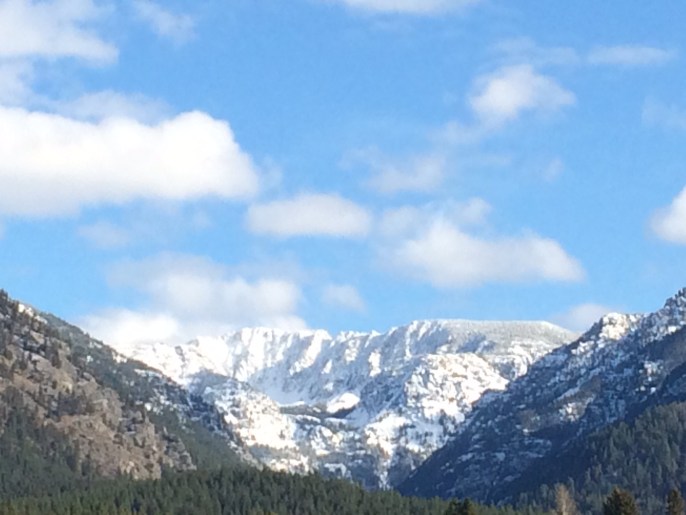
Shown in the photograph above is North Crow Creek Canyon in the Mission Mountains of Western Montana.  I have a beautiful view of the canyon from my front yard.  Snow is piling up now that winter is here.  December is probably the least busy month for gardening of the year in colder climates like ours.  Here are a few things we might need to do.

Check stored vegetables and fruit often; inventory seeds and test germination of last year’s seed.  Plan your 2017 garden and order seed.  Keep perennials and bulbs planted next to the house covered with snow to insulate them from extreme cold.  Make sure all young fruit trees have their trunks wrapped and place wire netting around trunks to prevent damage from rabbits and voles.   Mulch hardy tree seedlings and bulb beds with pine or fir branches.

Save wood ashes all winter long to spread on beds in spring on plants that enjoy alkaline soil conditions.

VEGETABLES

Admit air to cold frames and cover frames at night.  Uncover on mild days, but do not let sun shine on frozen plants.  Pick off any decaying leaves.  Cover frames every night with mats, blankets, straw, ferns or insulating row fabric.  Late cabbages, kale and greens should be under hoops covered with row cover fabric.

Check stored vegetables often: potatoes, onions, carrots, and cabbage, etc.  Also check stored flowers and fruit: dahlias, glads, cannas, apples, pears.  Cabbage likes high humidity (80-90%) and a storage temperature of about 35 degrees.  Potatoes, glads and dahlias prefer about 45 degrees and high humidity.  Onions and garlic need air, with about 60% humidity, so hang and keep them dry, storing at about 35 degrees.  Apples need about 30-35 degrees with high humidity.

Force asparagus in hot beds.

FLOWERS

If there is no snow, cover perennials and roses with evergreen branches to protect them.  Spread thin, flaky manure over pansies, carnations, pinks, tulips, penstemons and phloxes.  Spread composted manure over the vegetable garden.  Over the winter the manure will break down and feed the soil.  Any pathogens will be gone by the time you begin planting vegetables in mid-March.

For house plants: start amaryllis, watering lightly at first with warm water.  Keep in a warm place and gradually increase watering as the stems elongate, but do not keep the plants wet.  Moist soil is best.  Watch for spider mites on houseplants, mini roses and amaryllis.  If you see them, wash the whole plant first with plain water; then spray with insecticidal soap or garlic/herb spray every 3 days for 2 weeks.  Another method to control spider mites is to spray foliage every day with water.  Spider mites do not like frequently  wet foliage.  Do not over water houseplants this time of year, especially geraniums, which are nearly or totally dormant now.

Late in the month, after the 20th, start seeds of begonias, geraniums, primroses, Dahlias, pansies, and lisianthus.

For potted auricula primroses and other hardy plants in cold frames, keep admitting air into the frames when it is warm enough and keep frame covers handy if the weather gets very cold.  Cover outdoor primulas with light straw.

FRUIT

Check stored fruit often for spoilage and discard any rotting fruits.

TREES, SHRUBS AND ROSES

Take cuttings of lavender, pyracantha, sumac, spirea, mock orange, wiegela, wisteria, and robinia.  Place cuttings in a mixture of ½ peat and ½ perlite.  Insert small stakes into the pot to act as supports.   Place plastic bags over the tops of the pots and sink them into sand or soil inside a cold frame situated out of direct sun or in shade .  The cuttings should root over the winter.

NATIVE AMERICAN HEIRLOOM VEGETABLES

Standard

NATIVE AMERICAN VEGETABLES

It is an interesting fact that some of our most popular vegetables are from the North and South American continents.  These include: beans, corn (maize), squash, sunflowers, amaranth, chili peppers, tomatoes, tomatillos, and quinoa.  All are plants originally found in the wild, brought into cultivation by Native American peoples.  This process, known as domestication, began nearly 8,000 years ago and still continues today.  Each growing season, people selected the most flavorful, productive, largest and best-adapted vegetables to eat and to save seed from.  Many tribal groups all over the Americas are still growing and saving seed each year.  Corn, or maize, as it is properly known, began as a wild grass in central Mexico.  The oldest cobs, from archaeological sites dating to 6,750 years ago were tiny—only about one inch long!  By 1492 six different classes (basic types) of maize had been developed; popcorn, flint, pod corn, flour, dent, and sweet corn, with cob sizes up to 15 inches.  The same activity of selecting the best of the best was undertaken for each of the vegetables listed above.

It can be seen from the list that without exception, all these plants are tropical or subtropical in origin.  People who lived in the north, or at higher elevations as we do, needed varieties that would mature earlier, in time for harvest and storage.   By gradually selecting for early maturity season after season, these crops could be grown in areas with shorter and cooler seasons.  The Mandan and Hidatsa in the Dakotas developed early varieties of beans, corn, squash and sunflowers.  In the American Southwest the Hopi, San Filipe Pueblo group, Taos Pueblo group and others at high elevations developed early strains as well.  Early-maturing types of quinoa, tomatoes, amaranth, maize and chilies were developed in the high mountains of Central America and the Andes Mountains.

In our local area, Western Montana, we are fortunate to be able to grow a number of heirloom vegetables from various tribes living in short season areas.  I grow over 30 different varieties of these vegetables here in Ronan.  Some are quite rare now and we need to preserve them.  An advantage is that growing them here season after season will result in locally-adapted strains.  All of these traditional Native American vegetables are open-pollinated, so seed can be saved from year to year.   Of course, these are not hybrids, nor are they GMO strains.  However, caution must be observed in seed-saving.  Maize is wind-pollinated, so each variety must be isolated from other maize varieties to remain pure and prevent pollination by GMO or other strains of maize.  You need to grow more than 200 plants of maize each year to avoid inbreeding depression, which results in infertility and non-viable or no seed.

In my garden I have had good luck maturing Hidatsa beans, San Filipe chilies, yellow and white Scallop summer squash, Crookneck winter squash, Navajo and Long Pie pumpkins, and Hopi Dye sunflowers.  Next year I am planning a much larger garden and will test more varieties.

Some of the virtues of heirloom Native American vegetables are that they are adapted to the American climate, store well, are open-pollinated, easy to grow organically and resistant to pests and diseases.  Another important factor to remember is that vegetables are very healthy for the body and much superior to the packaged, additive-laden food so popular today.  A diet rich in vegetables can also reduce the instance of diabetes and other diseases.

We have some pictures below of some Native American vegetables adapted to shorter growing seasons.  The maize is Hopi Blue flour, the squash is an heirloom from the Ute tribe, the beans are Zuni Gold and the sunflower is the rare Hopi Dye sunflower.

NOVEMBER GARDENING CALENDAR

Standard

fullsizerender-8

NOVEMBER GARDENING CALENDAR

GENERAL

Early in the month, prepare beds for next spring’s early crops; add manure and trench into furrows to receive frost (this will break down and lighten/feed the soil).

Check over which varieties of flowers and vegetables you liked or disliked, which ones did well, and make a note of it.  Keep records up to date.  Check stores of fruits and vegetables and discard spoiling ones.  Clean all your tools, oil wooden handles and replace cracked ones.  Drain gas and oil out of lawnmower for winter.

VEGETABLES

Finish planting garlic, shallots, and Egyptian walking onions.

Have row covers ready for remaining crops in the field; also have covers ready for cold frames.    Carefully store row covers before winter; make sure the fabric is dry before folding and storing.

Early in the month, if not done earlier, harvest and store cabbages.  To store them, turn them upside down to dry, take off extra leaves and place them in a trench of sand and cover with a wet-proof cover open at both ends to keep them dry.  Close the ends of your cover with straw when frosty.  Also, to store beets, carrots, parsnips, turnips, salsify for winter: dry and cut tops off.  Dig a pit in a dry place if possible.  Put down 2 inches of sand, then roots, then more sand, alternating.  Then cover with sand again and straw to protect them.

Admit air to cold frames and greenhouse on sunny days; pick off any mildewed or moldy leaves.  Force asparagus in hotbeds.  Manure outdoor asparagus and rhubarb to 4 inches deep.  Weed onions, leeks, spinach, mache, cresses.  In frames: when it is cold, cover lettuces, cabbages, etc.  Harvest late and frame–grown cabbage, spinach, carrots, peas, cauliflower, lettuce, broccoli, Brussels sprouts.

FLOWERS

Finish dividing and replanting perennials before winter freeze-up.  Transplant seedling perennials and flowers into flats; keep them in a cold frame or cold greenhouse.  Mulch primroses, bleeding hearts, and any marginally hardy perennials with pine or fir branches.  Pot up double daisies; keep in frames.  Move potted flowers to frames to protect them from heavy rains.  Take and root cuttings of Pulsatilla.

Cut back established pansies, collect violet seed, continue to ventilate frames.  Prepare pansy and violet beds for planting.

Finish planting bulbs out and plant bulbs to be forced in pots.  Weed bulb beds and spread bone meal if not done last month.  Put poultry netting over newly planted tulips, crocus and hyacinths to discourage squirrels.

In the greenhouse admit air; the plants will be at rest.  Keep foliage dry, do not over water or not at all!  If mold appears, dust with sulfur.  Plunge pots of border auriculas, primroses and carnations up to the rims into gravel or soil in a frame.  Be sure to give air.  Cover frames if frosty and cold, letting no sun shine on them when frozen.  If you have bulbs, perennials, roses or shrubs growing in pots outside, be sure to sink them up to the rims into soil, sawdust or gravel to protect them from cold over winter.

FRUIT

Weed fruiting shrubs, add manure to raspberry beds.  Finish storing apples, pears, etc.  Clean all leaves and mummy fruit around trees to prevent disease and discourage insects.  Sow seeds of fruit trees and rootstocks.  Make hardwood cuttings of Prunus and Vitis cultivars.

TREES, SHRUBS AND ROSES

Finish planting deciduous shrubs and trees.  Layer clematis, divide Mahonias; take cuttings of lavender, Forsythia, Rubus and lilacs.

OCTOBER GARDENING CALENDAR

Standard

fullsizerender-6

OUR PHOTOGRAPH SHOWS A BLOOM OF ‘DART’S DASH’

A RUGOSA ROSE FROM THE 1930s

GENERAL

Bring in any remaining vegetables to ripen, or cover them with a row cover designed to take frosts into the mid-20s.  Plant bulbs, wildflower mixes and hardy annuals.  Harvest apples and pears, and sow seeds of hardy trees and shrubs.

VEGETABLES

Have row covers ready for tender plants that might succumb to fall frosts.  Crops can still be harvested in cold frames and under row covers into November.  Ventilate plants in frames and give air and water freely.  When it is cold, cover with mats or straw and do not let the sun shine on an open frame full of frozen plants.

Finish digging potatoes early in the month in case we get a heavy frost.

Harvest Brussels sprouts, cauliflower, cabbage, carrots, lettuce, spinach and herbs.  Harvest and store cabbages late in the month: Turn them upside down to dry, take off extra leaves and place them in a trench of sand and cover with a wet-proof cover open at both ends to keep them dry.  Close the ends with straw when frosty.  Thin spinach and lettuce planted last month.  If you have protected your pepper plants from frosts and heavy frost is on the way, pull up the plants and hang them upside down to ripen fruits.  Harvest ripe squash and pumpkins, leaving a one to one and a half inch stem.  Dig, divide and transplant garlic and shallots.  Hang onions to dry in an airy cool place.  Cut asparagus and perennial herbs back before winter.  Carrots may be left in the ground and covered with two feet of straw, leaves or peat moss to pick as needed most of the winter.

FLOWERS

Plant bulbs this month, finishing by November 1; give a top dressing of bone meal to the previous season’s bulbs beds.  Divide and replant peonies and plant wildflower seed.

Divide perennials late in the month, after cool weather begins, into November.  Sow seeds of late-blooming perennials (to sprout in spring).  Trim lavenders and other shrubby herbs to a few inches and give them a light dressing of manure.

If not already done, dig tuberoses, dahlias, amaryllis, glads and other tender bulbs.  Spread them out to dry in a warm room, clean off hair roots and decaying foliage and pack them up in dry boxes of sawdust.  Keep your bulbs in a cool, dark, dry, frost-free location.  Weed established bulb beds and spread bone meal as a top dressing.


FRUIT

Harvest apples and pears for storage when the trees are dry.   To test for ripeness gently twist fruit gently one way or the other.  If it comes off easily it is ready to pick.  Place harvested fruit in heaps in a shed to dry further for 10 to 14 days.  Examine each fruit for bruises, which will cause rot in storage.  Wipe each one dry, wrap in paper and store in barrels; or, wipe dry and place in dry sand in the barrels.  Keep in a cool, dry cellar away from frost.

TREES, SHRUBS AND ROSES

Transplant trees, shrubs and fruit trees late in month.

Watch for leafhoppers on roses and spray before severe frosts occur to get last generation before winter.  To protect tender roses over the winter in cold areas, mound each plant with soil about 6 inches deep and place a layer of evergreen branches over that.  In the spring the soil can be removed gradually, about an inch at a time.  In the spring, uncover the plants gradually.  Use a gentle jet of water from a hose once a week or so, finishing about May 20.   If a heavy late frost threatens, place the evergreens over the crown of the plant again, removing them when weather warms.


FALL IS FOR PLANTING TREES, SHRUBS, ROSES AND WILDFLOWER SEED!


PLANTING SPRING-FLOWERING BULBS

Standard

img_2419


I have three pictures above depicting flowers of heirloom bulbs.  The double daffodil is ‘Van Sion’ dated 1620.  The hyacinth is ‘General Kohler’ a rare double hyacinth from 1878. The tulip is an old Cottage-type tulip with variegated petals.  This type of tulip was much loved in the Dutch golden age in the 1600s.  Many tulips, hyacinths and daffodils still exist from hundreds of years ago, but are quite rare now.  It is important to keep growing and propagate them so they will not be lost forever!  I am going to list methods of culture and planting for spring-flowering bulbs in this article.

The best time to plant spring-flowering bulbs is when soil temperatures drop below 60 degrees.  In Montana this may occur as early as in August, but because of our frequent fluctuations in temperatures, October or early November is the best time.   Many spring bulbs establish root systems in the fall while the soil is not yet frozen.  If necessary, bulbs can be planted right up until the ground freezes, but will bloom better if you get them in earlier.

Bulbs prefer a well-drained location in the garden.  Tulips, hyacinths, and grape hyacinths need full sun.  Daffodils, snowdrops and glacier lilies (trout lilies) like part shade, though daffodils will grow in full sun in Montana and other cool areas of the Northwest.  Daffodils are deer and rodent proof, but most others, especially tulips, need to be in a place protected from deer and voles.  Dig your soil about 10 or 12 inches deep.  Sandy loam is the best soil for bulbs, but you can improve your soil.  Add gypsum to break down clay; peat moss or compost will also help.  Bone meal is excellent food for bulbs.  It adds phosphorous, which promotes larger and more numerous blooms.  Mix bone meal well with the soil in the bottom of the bed for best results.  Soil pH should be about neutral for these bulbs, but hyacinths and tulips will tolerate more alkaline soils.  Plant tulips and daffodils at 5 bulbs per square foot, hyacinths and glacier lilies at 3 to 4 per square foot, and grape hyacinths at 8 to 10 per square foot.  After planting, backfill the soil but do not pack it down over the bulbs.  Water the bed well.  A winter mulch of evergreen branches will help protect your bulbs over winter.  Straw is not a good mulch for bulbous plants because as it rots down it attracts disease carrying organisms like botrytis and mold.

The general recommended planting depth for bulbs is three times the height of the bulb deep; pointed end up.  Tulips, hyacinths and daffodils should be planted about 6 to 8 inches deep, grape hyacinths and glacier lilies about 4 inches deep.

Leave foliage on your bulbs and let it die down naturally.  This feeds the bulbs and helps them to flower well next year.  Most bulbs, especially tulips, like dry soil conditions after foliage dies down.  In some climates, or if summer bedding is planned for that location, people dig and store their tulip bulbs and replant them in fall.  Here in Montana, you can leave the bulbs in the ground if you give no additional summer water.  Do not water them until October.  To give the roots a boost before winter, spread bone meal over your bulb beds before you water.  Glacier lilies and a few other bulbs like to grow in moist soil, but can tolerate dry soil conditions for a short period during late summer.

SAVING SEEDS FROM YOUR GARDEN

Standard

fullsizerender-3


An excellent way to preserve a favorite vegetable variety is to harvest and save the seed from your own garden plants.  This can be done with all open-pollinated (non-hybrid) vegetables.  Hybrids are pollinated by humans for a specific resulting plant.  (Seeds saved from hybrids will not produce the same fruit or vegetable you grew.)  Many rare, open-pollinated heirloom vegetables and flowers have been saved and passed down for generations.  Some Native American kinds of squash, corn, beans and sunflowers have been passed down by various tribes for over a thousand years!  Several heirloom kinds of lettuce, peppers, pumpkins, squash, tomatoes and other vegetables still exist from Colonial and Victorian times.

Locally adapted varieties will be the most successful and productive.  You will need to save about 100 to 150 seeds of each cultivar you want to save.  Some easy vegetables to begin with are tomatoes, beans, peas, and lettuce, which are all self-pollinating and easier to keep true to type; they can also be cross-pollinated.  Other vegetables need to be cross-pollinated to produce seed and will cross with other nearby plants of the same genus or species.  Each variety needs to be isolated so it will remain true to type.

Isolation may be accomplished by distance; staggering maturity dates; by caging, or bagging.  For most vegetables 200 feet of distance is enough to retain genetic purity, but some, such as corn, need a mile or more.  Staggering maturity might be accomplished by planting two strains of corn, one maturing at 65 days and another at 80-85 days.  Pollination of the early variety will be finished by the time the later one is ready to pollinate.  Cages can be built and covered with row cover fabric to isolate radishes, beets, turnips, carrots, parsnips and onions.  A bait of honey spread upon a plate will attract bees into an uncovered cage.  When about 15 bees are present, cover the cage for an hour or two; release the bees before sunset. There are three species of squashes and pumpkins commonly grown so you must research this if you want to keep your strain pure.  Corn, squash and pumpkins can be hand-pollinated if bagged.

In the garden, give plants grown for seed more space to accommodate tall seed stalks.  Select the most healthy, robust plants to save seed from.  The fruit should be riper than that used for eating.  Usually fruit will turn yellow, soften and sometimes even begin to rot before seeds are mature.  Pea seed turns green or yellow; beets, beans and watermelon seeds darken; peppers and squash seeds are usually white, and corn seed (especially sweet corn) will dent and shrivel.

To process seed for storage, remove pulp, juice or flesh and dry the seeds on a fine screen because seeds will stick to paper or cloth.  A float test will show viable seeds.  Those that float will not grow.  Dry the seeds to about 10% moisture before storing away in glass jars with metal lids.  Glass jars are the best way to keep out humidity, which might cause your seeds to sprout and die in storage.  A cool, dry place is best for storage, or you may place the jars in the refrigerator.  Label your seeds carefully to keep good records.

SEPTEMBER GARDENING CALENDAR

Standard

IMG_0667

SEPTEMBER GARDENING CALENDAR

GENERAL

Harvest beans and other crops; remove blossoms from eggplant and peppers to ripen remaining fruits.  Cover sunflowers from birds, pinch tomato tips.  Lay down grass turf.  Watch for slugs and snails, cultivate to destroy grasshopper eggs.  Also, watch for corn earworms.

VEGETABLES

Cultivate or hoe around cabbage, cauliflower, broccoli, turnips and celery.  Keep late maturing cauliflower and broccoli well-watered.  Transplant out starts of endive the first week of September.  Plant garlic and shallots and over-wintering onion sets.  Direct seed outside: arugula, lettuce, radishes, cress, corn salad, chervil and kale.

If you plan to grow crops under tunnels or in a cold greenhouse over the winter, plant seed (early in the month) of crops for winter use: chervil, kale, spinach, lettuce, radishes, corn salad, and winter cress.  Later in the month, from the 20th to the first week of October, plant seeds of cabbage, cauliflower and other brassicas for transplanting out into tunnels in OctoberHave winter cover ready by October 1.

Make beds for growing mushrooms.  Well-rotted horse manure is excellent for mushroom beds.

Gather ripe seeds of any vegetables (or flowers) you want to save seed from.

Watch outdoor temperatures and bring in house plants if frost threatens.

FLOWERS

Prepare beds for planting bulbs.  Sow seeds of bulbous flowers collected in summer.  Take cuttings of violets and pansies; plant cuttings out in early spring.  Transplant peonies and lilies.  Dig dahlias after killing frost.  Transplant pinks and carnations with root ball intact late in the month.  Late in the month, plant out perennials and biennials where they are to bloom.  Also, most perennials can be divided now and replanted where they are to bloom.


FRUIT

Gather ripe fruit from apples and pears.  Remove diseased fruits and “mummies”, rake up leaves under fruit trees and destroy them (to prevent apple scab).  Prepare equipment to make cider.  Finish budding apples.  Prepare beds for planting fruit trees, using well-rotted manure, digging down 18 inches.  Take cuttings or make layers of gooseberries, currants, honeysuckle, and other trees and shrubs.  Plant seeds of fruit trees: cherry, plum, apricot, apple, pear, etc.

Keep strawberries free of weeds and the soil moist.  If you plan to force strawberries in winter, now is the time to take them up and pot them.  Cut a root ball out with a knife, trim off dead leaves and runners and pot into 7 or 8 inch pots.  Place them in shade and water well.  Then plunge the pots in earth up to the rim.  Take them up and into frames or greenhouse before cold weather.

Protect ripening grapes from birds with netting or gauze; keep weeds away from plants.  If wasps are a problem, hang containers of sugar water to catch them.  Prepare to make wine if desired.

TREES, SHRUBS AND ROSES

Trim branches of evergreens and walnut trees, so wounds will heal before winter.  Keep weeds cleaned out from nursery beds and plantings of young trees.


A GARDEN FOR POLLINATORS

Standard

IMG_3323

A GARDEN FOR POLLINATORS


Some plants are pollinated by wind, others by water and some are even self-pollinating.  However, most flowering plants depend on bees, birds, flies, beetles, butterflies or other creatures to pollinate their flowers.  In recent years pollinators have declined in numbers worldwide, due to destruction of their native habitats or have had their numbers reduced by pesticide use.  We can help preserve and increase numbers of pollinators by creating safe, productive homes for them around our own homes, without pesticides and with less water.

The size of a pollinator garden can be based on the space available, but even a small plot or containerized garden can provide habitat for several species.  Imitate the natural native landscape as a guide to the design of your garden.  A sunny area with good drainage is best.  To provide nesting places, leave or add logs, tree stumps, rocks, and piles of branches.  Standing dead trees are excellent habitat for mason bees, woodpeckers and owls.  A spot of bare soil will help certain pollinator species: for butterflies, provide a moist, muddy depression so they can drink and feed on minerals in the soil.  A sprinkle of sea salt will provide even more minerals.

A garden planted with native plants is probably the best way to encourage all our pollinators.  Double or “improved” flowers with no pollen or nectar are of no use to them and non-native plants are less likely to offer food for young.   Since pollinators are present from early spring through late fall, try to plant a variety of plant types (shrubs, perennials and annuals) so you will have flowers all season.  Plant in groups of several plants of each species, as you would see in nature.  Planting a native wildflower mix will provide a good range of plant species and will provide color all season.

Bumblebees can tolerate cooler temperatures than other bees and appear early to feed on golden currant (Ribes aureum), service berries (Amelanchier alnifolia), and chokecherry (Prunus virginiana).   Bumblebees nest in abandoned rodent burrows, under logs, rocks, or even under grass clippings.  Most native bees prefer yellow, blue and purple flowers.  Green sweat bees and leaf-cutter bees prefer aster-like flowers such as sunflowers, gaillardia and coneflowers.  Orchard mason bees emerge early and are very efficient pollinators of fruit trees; native plants they prefer include penstemon, astragalus, chokecherry, and serviceberry.

Montana has 220 species of native butterflies.  It is a good idea to provide both nectar-rich flowers and plants for their eggs and larvae.  For example, the beautiful yellow and black two-tailed swallowtail butterfly lays its eggs on serviceberry leaves.  Branches, leaf litter, bark and rocks provide winter cover for butterfly eggs, larvae, or pupae.


Moths are also excellent pollinators.  You might have seen the striped sphinx moths appear around dusk to feed on evening primrose or honeysuckle.  Some other Montana native insect pollinators are flower beetles, hover flies and pollen wasps.  Pollen wasps have antennae with bulbs or “clubs” on the ends and do not bite humans; they live on pollen and make mud nests on twigs or rocks.

Hummingbirds are beautiful, tenacious creatures that transport pollen over long distances.  Three species of hummingbirds (rufous, black-chinned and calliope) migrate to Montana every season.  Hummingbirds prefer tubular-shaped flowers, such as native orange honeysuckle, monarda and penstemon, but will feed on many species that offer nectar.


Standard

AURICULA PRIMROSES

When we think of primroses, the first thing that comes to mind are the ‘Pacific Giant’ hybrid primroses we see in garden centers.  Actually hundreds of species of Primula are in existence, and some species have been brought into gardens and significantly developed.  The auricula primroses, members of the species P. auricula, have been grown in gardens since the 1500s.  They have evergreen leaves that curl around in a way that resembles the ear of a bear.  When first cultivated, they were called ‘Bear’s Ears’.  Charles l’Ecluse (known as Clusius) is the first person known to have grown auriculas in a garden.  This was after 1573; he grew two kinds.  The first auriculas grown in England are illustrated first left above, in a woodcut from Gerard’s Great Herbal of 1596.  By 1639, at least 15 different colors and even striped forms were grown.  Auriculas were a popular plant beginning in the early eighteenth century when keen collectors began to grow and exhibit them in competitions.  These growers were called ‘florists’.  Several specialized classes of auriculas came into existence over the following centuries.  Potted plants were (and still are) exhibited in flower on black painted shelves in a stage-like display.  The black background highlights the beautiful colors of the flowers.  Auriculas do have an extremely wide color range, much greater than practically every other kind of flower.  The second picture shows a tawny-colored auricula, a color popular in the 1600s.  Auriculas were extremely popular in the nineteenth century, but curiously, are not well-known today.

Auriculas are native to the Alps and prefer gritty, moist, well-drained soil with a good amount of humus.  They are tolerant of alkalinity and extremely winter hardy to USDA climate zone 3, or even zone 2 if covered with snow all winter.  This means they are perfectly suited to growing all over Montana.  They are shade plants, especially when grown at lower altitudes.  The individual plants are small, only about 8 to 12 inches tall when blooming.  The engraving third from left depicts a garden auricula from 1908.  A gardener must watch that vigorous neighboring plants do not overtake them.  Being evergreen, they grow rather slowly.  I found that a mulch of sharp grit, about the diameter of turkey grit, is excellent for them and will discourage slugs.  Auriculas thrive when grown organically and enjoy soil amendments such as bone meal, composted manure, kelp meal, wood ashes, and grit for excellent drainage.

The classes of exhibition auriculas are usually grown in pots and are smaller and less vigorous than garden auriculas.  The pots used to grow them are taller than average, as the plants have a long tap root.  Growers commonly use an organic soil potting mix with added grit, bone meal and wood ashes.  Grit is especially important for drainage, but also for itsmineral content.  Indeed, the flowers have a wonderful mineral-floral fragrance unlike any other.  The last picture above shows a double exhibition auricula.

Auriculas are available from specialist growers as plants or seed.  I grow mine from seed planted in a fine, fast-draining seedling mix, covered with glass and placed in a shaded cold frame.  I plant seeds in late fall or winter, so the seeds have a cold period before they sprout in the spring.  The plants are usually large enough to pot on by midsummer.  Mature plants are best divided  midsummer.  I would urge gardeners to try auriculas; they are beautiful and rewarding to grow.  If grown in the garden, they might be best appreciated in raised beds, where their delicate flowers can be observed.

GROWING HEIRLOOM PEONIES

Standard


Two main types of peonies are commonly grown in gardens: herbaceous peonies and tree peonies.  Herbaceous peonies die to the ground every winter and regrow in spring.  Tree peonies are shrubs; their flowers bloom early in spring on woody branches.  Today we will discuss the herbaceous, perennial peonies whose flowers appear in early summer.

Several species of peonies exist.  One of the first grown in gardens was European, Paeonia officionalis (the Memorial Day Peony).  The single form, with five petals, was grown in the Middle Ages.  Thomas Jefferson grew the double form in his garden.  In the early 19th century several garden forms of the species Paeonia lactiflora arrived in Europe from China and Siberia.  French nurserymen hybridized these with P. officionalis to develop new varieties.  Several are grown today as valuable heirlooms, such as ‘Duchesse de Nemours’, from 1856.  In the 20th century America became the center of hybridization for peonies; now hundreds of cultivars are available.

Herbaceous peonies are quite hardy, to USDA climate zone 2.  The long-stemmed, large flowers are excellent cut.  Three basic flower forms of peonies include: single or semi-doubles with one or two rows of petals; Japanese, with five petals and large stamenoids; and double flowers with many petals.  Older hybrids come in red, pink, coral, mauve, white and cream.  A group of newer hybrids are inter-generic crosses of tree peony species and herbaceous species.  Their color range is greater and includes some very nice yellows.  Double peony flowers can become very heavy with rain in the spring and are best staked or supported by cages.

Peonies are an excellent choice for organic gardeners, as they are subject to few diseases or pests.  I have seen powdery mildew on some peonies locally, but they were growing in a raised bed and in part shade.  Their roots were very dry in that situation.  Botrytis is another disease occasionally seen in cool, humid weather.  Leaves and buds wither and turn black, flowers turn brown.  Copper fungicide will cure this.  To prevent botrytis, clean up all leaves in the fall and plant in sunny, airy spots in the garden.

Herbaceous peonies are long-lived, growing in the same spot for decades.  Generally, peonies are easy to grow, well-adapted to our alkaline soil, cool spring weather and cold winters.  Good garden soil is helpful; be sure remove quack grass and other weeds before you plant.  Soil should be well-drained and moisture retentive.  Full sun is best.  Dig a good-sized hole, add compost or well-rotted manure and mix a small handful of bone meal into the soil 4 to 6 inches below the roots.  Plant the roots with eyes up, no deeper than 3 inches; one inch deep is best.  If peonies are planted too deeply they will not bloom.  Place individual plants about 3 feet apart.

August, September and October are the best months to divide and replant peonies here in Montana.  In the northeast section of the state, where winters are colder, August and September are probably best.